Monday, June 22, 2026

The Life and Opinions of Tristram Shandy, Gentleman

42 pages in and that’s it, I’m calling it. I cannot go on with Laurence Sterne’s Tristram Shandy. I don’t care that Virginia Woolf, whom I adore, called it “the greatest of all novels”. It’s just not. It’s terrible. It’s boring, and droning, and hard to follow. I don’t care that the author uses playful devices and visual cues. An enjoyable read that does not make.

I should have taken it as a sign when I realized that my copy (Modern Library Classics 2004 edition) was misprinted in the most ridiculous of ways. Giant chunks of pages are entirely out of order, making this nonsensical work even harder to follow. Page 4 was followed by page 37, 20 by 53, and on and on. It’s like the universe was telling me to give up right from the start. And you know what? I will. Because the universe is a woman, and I believe women.

So there it is. #3 of the abandoned lot on my journey to 1001 books. I’ll never know how it ends, and I don’t care.

Saturday, May 23, 2026

Them

Joyce Carol Oates’ Them brings me to 198 out of 1001 books on this list. Though an absolute brick of a book, the story reads quite easily in a very modern and accessible way—still, it’s utterly devastating in every single word that it contains. The way Oates cuts away and skips time immediately after a major event is so jarring. What an absolutely perfect choice she made there to depict the traumas of one’s life into flashback-like fragments.

There aren’t many acclaimed books that use Detroit as a backdrop (at least as far as I am aware of), so as a former Michigander, I was quite excited to pick up a novel centered around the lives of people in places that hit close to “home”. Of course, the lower-class lives of the Wendells are far from what I myself have known, but there was some kind of camaraderie in hearing the names of so many familiar streets and cities that gave me comfort.

The takeaway from this story? Life is devastating, and we are all victims of both ourselves and the environments around us. Still, you pick yourself up and keep going. Despite ourselves, love persists—whether its constant love for those that harm us, or the stubborn love for the places we come from.

Loretta is a terrible mother, and yet we feel sympathy for her. It’s absolutely heartbreaking to watch Maureen get beaten down, slowly having her bright future ripped away from her almost entirely at the fault of her mother. Jules, too, has such a kind heart and so much potential, and yet makes all the wrong choice. That’s the harsh nature of reality, though, I suppose.

Out of everything, the fact that the young Maureen envisioned the stories of romantic English novels to be more “real” than her own gritty life struck me with fascination. How much more real can you get than a life of misery? This book felt more real to me than any Austen novel ever could. But I guess anything that takes you away to another place for a while is “real”.

Saturday, March 28, 2026

The Remains of the Day

I have never been a fan of Kazuo Ishiguro’s novels (just recently, I worked through The Unconsoled and had a horrible time doing so), but having finished The Remains of the Day, I can understand why this is one of his more famous—and not to mention famous—works. Simple, quiet, and emotional in his signature style, it’s a better example of what Ishiguro’s writing can accomplish, if he only stays focused and has a solid concept.

The main character, Stevens, moves through his life with a professional detachment that borders on robotic (another consistent character type of Ishiguro’s), but his reflections, embarrassments, and hints of regret are all familiarly human. 

The climax scene of the story—contained in only a few short paragraphs—of the moment when Stevens and Ms. Kenton reunite and speak of their missed opportunities and what-ifs are relatable to anyone, making it all the more heartbreaking. We can’t change the past, so we make do with what we have. But it doesn’t mean we shouldn’t dwell from time to time.

Ok, fine. I’ll say it. With this book, Ishiguro finally wrote something that I genuinely like.

Thursday, March 12, 2026

Erewhon


Samuel Butler's Erewhon is the namesake of the trendy overpriced Californian grocery store known for over-the-top celebrity smoothies, playing on the fact that the Erewhonians take health so seriously that having any sort of illness is condemned as a crime. Knowing this, it's a pretty funny/extreme take on health culture, and makes me question if the creators are scamming us all 😂

Anyway, I've gotten off track. Back to the book.

It felt as if the narrative were written in three distinctive parts (though they didn't seem intended to be split that way). The first being an adventure story somewhat reminiscent of the style of Frankenstein, the second as a series of philosophic musings/essays, and the third composed of three or so very short chapters that almost felt like an epilogue. It started out so fun and exciting, but then it tapered off into all of these ideologies that were interesting enough, but not exactly *thrilling*. Then, at the end, it sort of tried to mix the two together in a half-ass way in a mad rush to get to the point which was just that...man sucks. lol. All in all, I'd say the experience felt a little disjointed and confusing...but then again...maybe that's just a reflection of how the main character felt during his journey?

Idk but here's a fun fact: the name Erewhon is derived from "nowhere" spelled backwards...with the h and w transposed. Everyone else probably noticed that besides me.


Friday, January 2, 2026

The House of the Spirits

Tragic and poetic, and mixing a bit of fantasy with the harshness of reality, Isabel Allende's The House of the Spirits challenges readers to look life's roughness in its face and cherish the romantic moments as best we can. Through the pages, one traverses generations of the Alba family's histories; hating some, loving others, and growing old with all of them.  Allende doesn't shy away from exposing the follies of her central characters, and its that fact that makes the story all that much more real. 

In the epilogue that sums up the memory of all that has passed, the reader gets a true sense of nostalgia as if they themselves lived and knew each of the characters' lives. Having recently reflected on generational histories myself with the loss of my grandmother, reading the end felt like a beautiful homage to the experience of being part of a family.

One ding I give this book? The sporadic and random shifting between narrators was a bit confusing and I didn't see much reason for it. In honesty, I only even realized what was happening there like a third of the way into the book, and then I had to Google wtf was happening. If it were up to me, I'd toss that.

Sunday, September 7, 2025

Wise Children

Angela Carter’s writing is always so delightfully feminine…in the best way. Reading her stories feels like looking at a rococo painting…all pink and lacey and girlish…even when the characters display a sense of raunchiness, dirt, and decay. Wise Children is characteristically Carter, displaying all of the glamour of the stage (the last one I read by her took place at a circus, similarly) amid family mess and chaos. There’s something in here about wealthy excess and bygone beauty, Shakespearean tragedy and incestual chaos…but I can’t quite place my finger on what exactly the allusion actually is. 

Instead, all I can say, is that this novel is a quick ride and a good time, just like its leading ladies. It’s even better when read aloud. Carter writes Dora’s narration as perfectly natural dictation, and you practically step into her memories as you voice her words. It’s a romp, with glimpses of emotion and wistfulness that are true to the experience of growing up. Four legs up.

Tuesday, August 12, 2025

The Unconsoled


What the actual fuck did I just waste months of my life on. I spent 535 pages convinced that SOMETHING, ANYTHING would eventually happen or some sort of clarity to be revealed, but it NEVER DID.  I knew I didn't like Ishiguro's writing, but my god, is he just a master of trolling his publishers with straight garbage and jumbles of words that have no meaning?

I guess what he does well is create the ambiance of a real dream that you're trapped in and can't make sense of. But that's where any praise ends. The experience is extremely unpleasant, stifling, and at times, like you're straight up being gagged. Conversations are mundane and everyone takes five hours to spit one coherent thought out. 

The book is divided into parts, and every time I would get to the beginning of a new one, some fresh hope would awaken in me that something would change. But no, FALSE. WHY BREAK THE STORY INTO PARTS IF NO TIME OCCURS BETWEEN THEM, AND NO SHIFT HAPPENS IN THE STORY? JUST TO TORTURE US????

And why even introduce plot points if you're never going to explain them? Sattler? WHO THE FUCK IS HE WTF. Gustav? DO YOU KNOW HIM OR NOT WTF. 

I hate this book. I hate it so much. I'm so glad it's over. That's all I can even say.

Friday, June 20, 2025

The Summer Book


The Summer Book by Tove Jansson (of Moomin fame) reads like a playful picture book. Jansson's writing is calming, like something intended to keep a child soothed and interested, but also has a tinge of nostalgia in it that is clearly catered for adults. 

The relationship between Sophia and her grandmother is loving, though often surprising (at least to an American) as the two often swap roles and subvert traditional expectations of what a granddaughter and grandmother should behave to one another. When they speak, Sophia (and sometimes the grandmother, too) uses jarring, harsh language that often made me question whether it was intentional or a strange translation choice. She often swears, or "screams" at her grandmother when she disagrees, and displays the selfish cruelty that children have, but are almost never portrayed with, in almost every interaction she has. Grandmother, on the other hand, balances patience with carelessness, seesawing between being Sophia's constant playmate and equal, to her guardian and mentor. 

Overall, it's a pleasant little collection of short vignettes that's perfect for a dreamy summer afternoon spent outside or near a window, close to nature. With Jansson's lovely descriptions of the island, and her adorable illustrations, it's almost certain you'll feel transported to the little Finnish oasis, and to feel your heart rate slow to a pleasanter, calmer, (happier?) tempo.

Monday, June 2, 2025

The Talk of the Town

The author, Ardal O'Hanlon, is described on the back cover as an "award-winning stand-up comedian and actor...best known for his portrayal as loveable dimwith Father Dougal Maguire in Channel 4's comedy, Father Ted", which led me to expect a lighthearted, sarcastic romp of a novel. But turns out O'Hanlon's first go at writing was much more nuanced than that. Quite gritty and obscene, it's a realistic (as far as a 30-something asian lady in America can tell) look at what it means to be a teenager/young adult in middle class Ireland. 

It reminds me a bit of a handful of TV shows that have gained popularity recently. Netflix's Adolescence, for instance, is quite similar in addressing boys' angst and the irrational mood swings that go on inside their heads. In the same way, this story ultimately ends in violence with an unclear, yet certain sense of doom that hangs in the air, weighing the consequences of uncalculated outbursts. I wonder if the novel inspired the show in any way.

Anyway, it's a modern novel that is easy to read in terms of length and jargon...so at times I felt reprieve in reading something from this list that never felt pretentious. I never felt bored or disliked the plot, yet it isn't something I think I would tap for a re-read. Perhaps I can find something more upbeat for my next read.

Tuesday, March 18, 2025

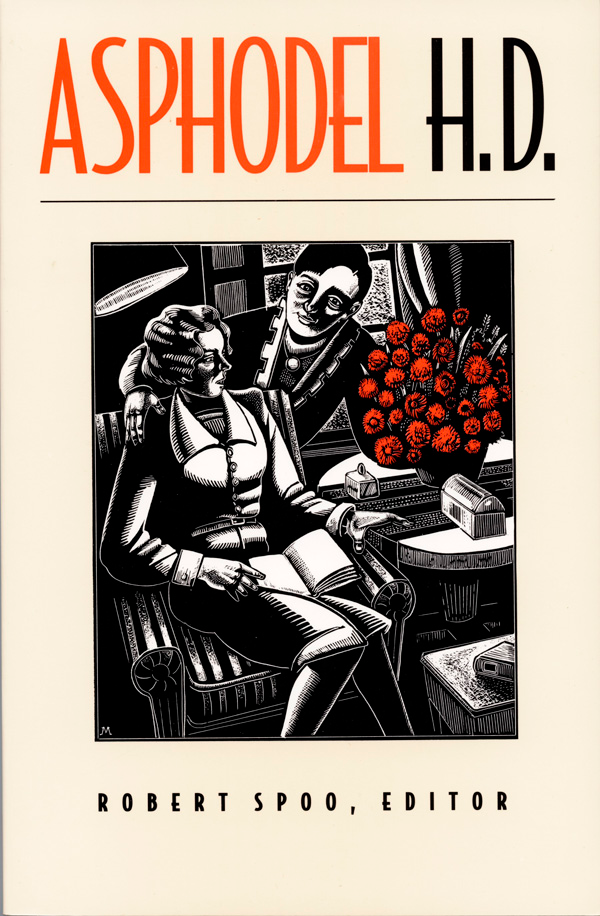
Asphodel


The forward by editor Robert Spoo is interesting. In it, he says that H.D.'s transcript, which he used as a basis for this published version, was full of misspellings and errors that made it unclear as to whether the words written were unintentional misses or creative choices. It's a tough job, I think, to be in those shoes—to be on the hook for representing an author's true intent but only being able to use educated guesses and when it comes down to it, your own gut judgment. I enjoyed having this insight, and it made me respect the work (both his and H.D.'s) and the history behind it in a deeper and more humanized way.

As Asphodel is based on the author's own life (though still considered to be fiction), I leaned quite heavily on the appendix to teach me how the characters related to those in H.D.'s life. Layering "Hermione"'s emotions onto the author's real life experiences felt quite intimate, and made me feel very close to this author that I so looked up to in college. 

At times, the stream of conscious style of writing was hard to follow, but there was always a poetic aspect to it that always had me thinking in the back of my head about a writer's intentionality. This work is more than just a one-note story of a woman's life. There's something else there, full of pain and relief, struggle and nostalgia, all of it wrapped in a bare honesty that sways back and forth between the meaningful and meaningless.

"There are no fields of asphodel this side of the grave."

Sunday, December 22, 2024

Lost Illusions

As a one-off read (especially in the year 2024), Honore de Balzac's Lost Illusions feels a bit long-winded for what it is. It certainly offers a detailed look into French life in the 1800s, showcasing a variety of classes and exploring the spectrum within virtues, naivety, and greed of humanity. But did it really need to take 630 pages to do so? 

I did find myself engaged in Lucien's debut and struggles in Paris, but lost interest after a while of so many repeated acts of selfishness. The pages after pages detailing the inner workings of the publishing industry, too, were maybe groundbreaking at the time (?), but I could have done with a briefer summation. I got the sense that it was a personal topic for the author, which sort of made me excited at times, but it ended at that.

I found it odd, too, that the story completely switches focus during the end and zeroes in only on Eve and David. I did care for them as characters, but feel that it would have been more balanced to read of their goings-on at the same time as during Lucien's dandy rampage. The ending certainly felt flat, with the two ending up just fine after all the focus that was put on the struggles that befell them. Is it just to point out that Lucien is a POS leech of a human? But then again Lucien isn't even mentioned at all in the final epilogue-ish roundup at the end???? He's just...gone now, taken by a Spanish priest? Weird.

All that said, my copy of the novel worked very hard to detail the impact that Balzac had on literature as a whole. The fact that he developed the same set of characters throughout many works written during his career, and writing stories that revealed true depictions of societal issues and human nature is certainly interesting and something to applaud. I'm sure it shaped a lot of the novels I love today, and also gives people in the future (me) an honest look into "regular" life 200~ years ago. 


Friday, March 8, 2024

The Once and Future King

 The Once and Future King by T.H. White is, simply put, a masterpiece. It's everything in one—whimsical, adventurous, humorous, adorable, playful, thoughtful, emotional, intelligent, and above all, kind. Nearly every single character that White introduces has a depth and lovability to them that's impossible to avoid becoming attached to, and the level at which he can create dimensionality and complexity to each one so that they feel like true flesh & blood is so impressive. 

Though based on the classic legend, you don't need to have any prior context about the King Arthur stories in order to enjoy this book to its fullest. At times full of jest, and at others, deeply serious, White's writing is always self-aware and accessibly engaging. Part I consists of an episode of the carefree and formative years of youth, the middle sections add introduction and context to new characters and relationships formed mid-life, with the final section ending with a wistful reflection back on all that has passed. 

At the finale, looking back at where the story started, you (or, at least I) really realize what a true saga you've a part of, and it feels like such a privilege to have been able to witness not only Arthur's whole life but the journeys of those around him. You come away hoping old Wart will be protected at all costs—not only physically, but emotionally...and you realize that the story wasn't really only one about a king and his round table, but one of humanity itself.


Saturday, July 22, 2023

The 13 Clocks

The foreword in my copy of James Thurber's The 13 Clocks was written by the venerable Neil Gaiman, and describes it as "probably the best book in the world". He goes on to say that "it doesn't need an introduction. It doesn't need me." and this loving, devoted praise written in playful, honest jest set me up to love the book before it even started.

The 13 Clocks is wonderful, dreamy, adorable, and sometimes frightening. It's the shortest adventure I've ever gone on, over in the wink of an eye, but introduces more fantastical new ideas than I could usually find in 30 volumes. There's a prince, and a princess, and witches and creatures with riddles, described in jestful language that keeps you reading more. You can tell just how much fun Thurber was having writing it, and the feeling is infectious.

Marc Simont's accompanying illustrations are equally masterful, and the perfect match to the magical world in which the story takes place. There's a cute, innocent look to the characters that balances a graceful beauty that perfectly captures the childlike fantasy of Thurber's rhymes, shadowed by the darker curiosities of an adult world. 

Playful, witty, and endlessly creative, this story is pure delight and it's one I'd happily read again and again.

Sunday, July 2, 2023

Miss Pettigrew Lives for a Day

Simply put, Winifred Watson's Miss Pettigrew Lives for a Day is a 1938 romcom. A lighthearted romp of a "modern" fairy tale, the main character storms her way through misadventures in a whirlwind way reminiscent of an Amelia Bedelia book, teetering between adolescent naivety and adult frivolity. The illustrations which intermittently appeared further pushed the feeling of it being a children's story with oddly comedic contrast to innocent line drawings with accompanying excerpts like "That's cocaine". Was this normal for the time? I've never seen it before, but if it was an intentional choice, it's hilarious and brilliant.

My copy included a preface by a woman whose mother loved the book for its ability to speak to the fantasies of a middle aged woman—and I can appreciate how that might be an exciting and appealing genre for a woman of that age and time. For me, it was a quick and enjoyable (though at times frustrating in the yelling-at-the-movie-screen kind of way) distraction that didn't require much thought. 

Though following Guinevere's adventures through a glitzy socialite's day was fun, what I appreciated most was the warmth with which female friendship was displayed. Delysia is so lovable and welcoming (while also beautiful), and that's such a rare thing to see in entertainment these days. That feeling of being accepted and appreciated as Miss Pettigrew was is what anyone wants, and that's the true Cinderella moment of this whole story. Finding a true friend can be the most rewarding thing a woman can ever experience.

Sunday, May 21, 2023

Do Androids Dream of Electric Sheep?


Philip K. Dick's Do Androids Dream of Electric Sheep? is oddly simple, dwelling on the loneliness of existence and human beings' endless pursuit of connection and deeper feeling in an ever-more isolated and artificial world. It starts strong, introducing a new world that's exciting to discover and seek to understand. Rick Deckard's motivations are engaging, and the mysteries of androids and the question of whether they're "good", "bad", or neither, is something worth investigating. 

But somewhere along the way, it feels like Dick loses steam and along with it, interest in his own story. At what should seem to be the climax of the story, Deckard shows up to battle his supposedly toughest adversaries, but finishes the job with head-scratching ease and the scene is over, just like that. Deckard's character is suddenly tired and confused, inexplicably losing the personality that originally made him so likeable. 

The ending, in a quiet moment showing Iran, Deckerd's wife, taking care of him for the first time feels incomplete and lacking warmth, but maybe that's the point. Like Deckard, the reader must ultimately settle and go on with their lives.

Friday, January 6, 2023

Memento Mori

Muriel Spark's Memento Mori started very differently from how it ended up. It seemed, in the first few pages, that it was going to be a quirky mystery about a happy group of senior citizens but became more of a nebulous network of...I don't even know what, centering around too many old folks that it was nearly impossible for me to keep track of who was who at any point. Maybe that's a remark on how easily young people forget the old and think them all the same without any remarkable features. I wish it had been what I initially thought, though, because I personally didn't get much entertainment or inspiration from this slog. Goodreads is full of 5 star reviews for this book and I really can't relate to that at all. I guess it was fine? But it wasn't enjoyable and after finishing it, I feel I've come away with nothing to hold on to.

The fact that the "villain" was named Mrs. Pettigrew threw me off as well since it's so strongly attached to what I only loosely know as a happy woman finding herself in a different Winifred Watson work.

I guess that's all I have to say to that. This recap pretty much sums up my experience. A big ole "shrug" emoji.


Wednesday, October 26, 2022

Nadja

Nadja by André Breton proved an extremely quick—though not especially easy—read. It's quite simply a thin volume of artwork, composed of short musings interspersed with photographs referred to in the passages. Queer things happen without consequence and are immediately forgotten, but a mystical kind of feeling hangs over every page and there's a weight in every curious photograph that's hard to describe. It's actually one of the most successful pairings of prose and visual arts that I've seen, as I think this type of thing often bears disappointment or confusion. 

I recently watched the recent HBO series "Irma Vep", and I get the same curiously playful mood from Breton's work. Perhaps it's some sort of Frenchness that they share—light with a bit of darkness, complex but never unpleasant. 

Thursday, October 20, 2022

A Farewell to Arms


Ok what the fuck?

I spent the entire time reading A Farewell to Arms wondering how Hemingway even had multiple drafts (my edition has photos of the author's handwritten notes and an appendix full of "Early Drafts") for such a simple and seemingly plotless narrative...but then the last 2 pages came and blew the drama out of the water. AND THEN IT JUST ENDS? WHAT HAVE WE LITERALLY BEEN DOING FOR ALMOST 300 PAGES?

Seriously, 282 pages of what read like a rando's personal diary for whom you don't feel any affection for, with terrible dialogue and a personality-less love interest, and then suddenly—and this is a spoiler now—she's dead and so is the baby (but also we don't care about the baby anyway?). I"m so confused about how this is even a book.

I chose this novel off the list because I had such a good experience with The Old Man and the Sea, but this was truly night and day. The heart-pumping action nor the passion of the former was non-existent (the main character in this book just nonchalantly slides out of danger like he's in a dream...or at least it's described that way) and sometimes the back-and-forth dialogue between the hero and his one-note old timey movie starlett love interest became so embarrassingly repetitive that it was downright cringe. "You won't with other girls will you now? Oh but I do want you to have other girls. I'm just a silly girl, don't you worry about me. I just love you so, don't you worry I'm a good girl now." Good god.

Hemingway MUST have learned how to write in some kind of dramatic change in the 23 years between Farewell and Old Man because they don't even read like they're coming from the same author. Is it the difference of pretentious youth and learned age? The difference is mind-bogglingly vast.

Friday, September 2, 2022

A Tale of a Tub

I must confess I've come across another work I've had to *partly* give up on.

I've attempted to get into Jonathan Swift's A Tale of a Tub twice now, and I just can't do it. The verbiage is too difficult and because the allusions he's making are so far in the past and unknown to me, it's pretty damn impossible for me to grasp what he's talking about at any given time...save the general story of the three brothers. 

I fell back on reading the cliff notes first to identify which chapters seemed approachable, and then used that to inform what I read as I went.  When clearly explained, I see that Swift is making clever critiques on social and political issues of the day but just from strictly reading on my own, it was neither enjoyable or comprehensible. I wonder if in its time it was considered accessible or "intelligent". If it was the former, it's interesting to see how vast the differences in writing and parody have come.

Wednesday, August 3, 2022

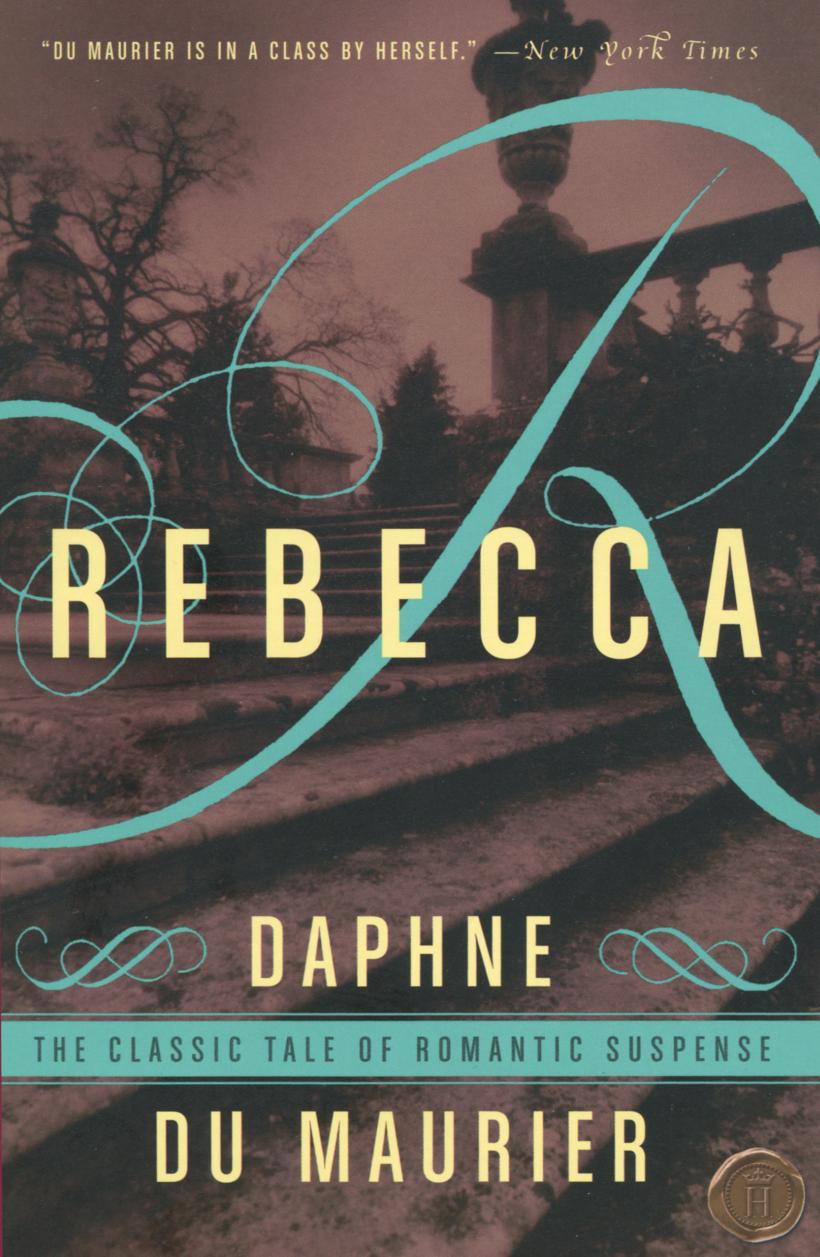
Rebecca

I remember "watching" Hitchcock's Rebecca sometime after college, eventually falling asleep puzzled that it wasn't the ghost story that I had thought it was supposed to be. The source material—Daphne Du Maurier's novel—is much better than I recall the film to be. At least, that's the way I feel now. Maybe I've just grown up a bit.

The first bit is a haunting mystery that's as consuming to the reader as the idea of de Winter's former wife is to the heroine. Every chapter psychologically affected me with a pull that made it hard to put down—and when I did, it took awhile for the spell of the story's dark mood to fall away and for me to come back to real life. 

The climax changes pace, but the feeling of foreboding mystery remains. It no longer has the creeping heaviness from the previous chapters, but more of a frantic modern one which is quite an interesting artistic turn. In fact, the author shows a lot of talent in what she does, for this being a somewhat older work. She doesn't play into cliche traps (at least, not toward the end; the fact that Ben keeps his secret through the end, for example) but rather takes surprising twists, knocking you off your path as you start to feel you've guessed the way ahead. The original epilogue included in my edition, as well, shows just how many smart decisions she made to create the final masterpiece.

I would love to see a depiction of how Du Maurier imagined Rebecca to look. In my mind, she was the subject of a Klimt portrait I saw at the Belvedere in Vienna. When I saw it, I remember thinking I had never seen anyone so beautiful. A woman from another era, out of reach and gone forever.