Friday, April 20, 2012

Another lady's company to pass the time

It's dreary weather today, with grey skies and mist. I woke up today hoping this lasts through the weekend, but the report doesn't seem to support those wishes. Boo.

Anyway, I spent the last few hours reading Capote's Breakfast at Tiffany's. I preferred In Cold Blood, mainly because I think it was better written, but also because I really dislike reading men's portrayals of their ideals. Self involved, beautiful women are not charming and irresistible to me (Z. Deschanel, for example), I prefer beautiful women with warm hearts, who are unafraid to make fools of themselves (without thinking so hotly of themselves, as the aforementioned does).
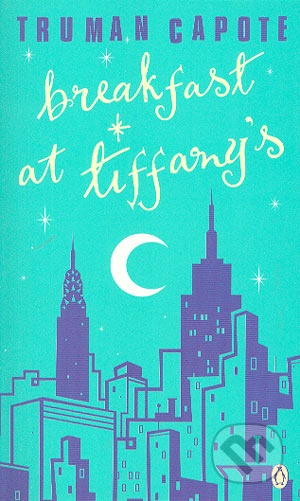
Holly Golightly is ultimately the same person as Nathanael West's Faye from Day of the Locust, and Fitzgerald's Daisy - though maybe, at the end, there is a little more depth peeking through in comparison. Self indulgent, unbothered, with an "I-can't-be-bothered-with-such-trivial-matters" air that masks the fact that they are rather dense.
The dense part aside, I'd known nothing of this story before I read it except for the fact that Audrey Hepburn starred in it in the movie. It's so difficult for me to picture Ms. Hepburn as such a bold, wandering figure without innocence. I find it ill-fitting, really.

I did enjoy that she had been speech-trained by being taught French before English. The quirky way in which she spoke was appropriate in that aristocratic manner she held herself in, but it was charmingly cute (maybe I'm biased, because I'm in love with French though). The cat, too, as her weakness, was another attribute that warmed my heart to her. The absurdity of picturing that cat in a laced frame though (and calling it fitting), seems funny to me, as he always seemed a gruff (in a good way!) animal. He reminds me of a specific cat I've known.

I guess I enjoyed the end, but I didn't really get much from this story. Nothing extraordinary, but not bad, either.

p.s. Discovered another book I've already read on the list (what is wrong with me that I can't find them earlier?) - Kerouac's On the Road

Thursday, April 19, 2012

All I can think of is Sylvia with her short blonde hair in her white dress

I'm currently working my way through #67. House of Leaves by Mark Z. Danielewski, but it is more of a cautious tiptoeing that is happening, as I tend to freak myself out easily about reading it, and therefore can only take about one or two chapters at a time before it either gets too dark out to bear reading it, or need a mental break. It is a very exhausting book to read, but I am enjoying it nonetheless, and it is playing with my head in just the psychological way that I am attracted to.

But we'll follow up with that when the time comes.

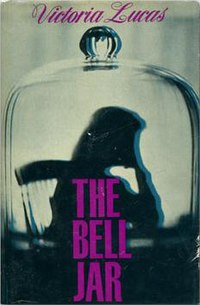
Because my progression with House is so slow, I decided to simultaneously start a smaller book to keep the ball rolling. With that I came upon #433. The Bell Jar, which I found online. I'd been familiar with this book as one that was always on the bookstores' bookshelves as popular reads for young women, which is really one of the reasons why I was always so adverse to liking (or even trying) it.
I'm familiar with Plath through her poetry. I knew she had a very strong, feminine voice that I didn't mind (I'm not very keen on feminist propaganda, but I liked her sing-songy voice and mix of young but heavy-handed imagery...except for some of her daddy attachments - despite the fact that I know she lost her father at a young age), and The Bell Jar was in the same way. Robert Taubman's review describing the novel as "the first feminine novel in a Salinger mood" is right. There is that exact youthful something- what's the word...not naivety, but something like that mixed with rebellion. Stubbornness? Over-emphasized self-awareness? - that Salinger has, but Plath's use of it is so much more fluid and unfocused on a specific topic. I guess what I mean is, more true-to-life in the stream of conscious way that one thing just leads to another and we all just float along.
Esther's situations and state of mind move so rigidly and boldly, it's surprising to think back on. Her posh and rewarded life in the beginning is so dramatically different from the other two "habitats" she lives in, that it's jarring to think that all of this is happening in the same story, to the same girl. I don't exactly think that Esther the character changes much from the beginning to end. Perhaps it's more that she becomes less cautious as time goes on, and lets the blankness replace her youthful curiosity. Curiosity does still remain until the end, but less so than before (as her interests become fewer, or maybe more honed in on, as time goes on).

I feel like I don't even know what I'm saying right now.

I guess I appreciate this narrative less as a story about Esther, than as Plath talking about her own mental goings-on. I'm more interested in what was happening inside Plath's head than I am of what will happen to Esther after her interview, and as I read I imagine her writing this - as I have written stories based on my own self - than anything else. I guess I saw a part of me in Plath (not Esther, though she is a reflection of her, but Plath as she wrote this) as a writer, which to me was a little bit disconcerting as I know that many girls must feel a connection to this story, based on its popularity. Maybe I'm more of a generic American female reader than I'd like to admit.

In the meantime, back to reading the novel I keep terrifying myself over.

Saturday, April 7, 2012

A gift

My dear friend Colleen was kind enough to offer to lend me her collection of books that are on the list. To my surprise, she brought over a file box half full of books and told me that she had been working on a birthday present for me, which was to be the box filled with books that I had yet to read. She's moving to California with her husband in August, so I had asked her last week if I could make the most of the time she has left here by borrowing as many books as I could before she left. Half of the box she brought over are to be returned to her, but she's supplied me with a decent sized stack of lengthy books for me to work on after I get through her's. I'm so very humbled and thankful.

I decided it would be most economical to try to read her books first, and work on the lightest reads so that I could get through as many as I can before Colleen leaves. I've just finished Hitchhiker's Guide to the Galaxy by Douglas Adams, a book that I had heard mentioned a lot, but never knew much about. I think I had mostly heard about it in some way attached to adolescent boys, and therefore thought it was some sort of juvenile book (I had also not really expected it to be a novel) for middle school children. I was pleasantly surprised, though, to find that it was versatile to be both that, as well as an entertaining little "trip" for adults, too. It was refreshing to read something so breezy and casual after my stint of morose genre. Hitchhiker's was funny and whimsical (can I call sci-fi whimsical?), and I was reminded of my fondness for the humor that British writers are so skilled at writing - sarcastic, absurd, and still intelligent? I can't really describe it, but I guess it's something of a trademark of theirs that everyone is familiar with so I don't really need to try to.
There was a weird dis-attachment to the characters for me. I liked them all enough, but I don't think I really cared deeply for any one. I think I started to, with Ford and Arthur, but reflecting on it when I started to see that happening, I realized that I didn't, really. I was growing quite fond of Slartibartfast probably most, but he was sent away quickly after serving his role, which was unfortunate. I wish his characters weren't so mostly humanoid, though I guess I can't really blame a human writer of having a hard time coming up with fantastical aliens. I quite liked the idea of a hyper-intelligent being taking on the form of the color blue (or however it was that they were described).
Adams' flitting from one idea to the next (though these ideas were very fluidly tied together) played down any seriousness, which worked as a consistent whole...after so many near-death escapes, it was becoming obvious that the crew would never be killed, but it was just as probable that Adams would, in one sentence, kill them all off and end the book. That, I think, is an interesting idea in itself, whether or not it was intentional. Such abrupt writing never allowed for any attachment, but rather forced the reader to accept everything as fact to be considered for a brief moment (maybe that's what works so well for younger readers). This continued for the entirety of the book. But maybe that's the point, relative to this Universe.

Not sure which book I'll open next (so many options!), but probably something a little darker, to get some sort of pattern going. Until next time.

Tuesday, March 27, 2012

I finished these long ago and now cannot recall what I had to say


#641. Miss Lonelyhearts by Nathanael West came in a compilation with his The Day of the Locust. I was preferring the latter when I started for its artist protagonist, but now after finishing both, I'm not so sure.

West undoubtedly has an attraction to disaster. Both of his stories were written in that dirty tone that just makes one sad by association, which I find a little difficult to maneuver (I am a lover of beauty, to be sure).

One thing I did like very much was any time Miss Lonelyhearts was brought up, then immediately referred to as a "he". It was a something comical and cute thing to do amidst such an adult backdrop.
The ending, too, I think was quite the embodiment of ...is it modernism? something like existentialism? Either way, I think the copy I have kept referring him to Kafka, which is extremely fitting. Abrupt compared to the lag I felt when reading the distasteful plot line - like putting off the flame from a candle - it was accurate and precise which was surprising in association with the story preceding it.

My initial liking for Locust, I think, came from the fact that the protagonist was an artist. That did not hold up for the remainder of the short story after a few chapters though, as he was, once again (as apparently West prefers), a (though less than others) degenerate sad sack, if you will. Were all people in the 30s-40s all so down like that? I mean, I know the Depression is to be considered and all, but these are problems outside of wealth. It's hard for me to sympathize with the kinds of characters as West's when I'm in a situation trying as hard as I can to change my unhappiness (not that I couldn't be doing more, obviously. But compared to my moderate attempts, these characters are just repulsive).

The book has a very nice cover image though, wouldn't you say?

Thursday, March 15, 2012

Of yearnings and other things

Ugh, half my post was just deleted so it is with half a heart that I try to reconstruct this post.

The spring weather is forcing me into a lighter mood, but I don't think I'm quite ready due to the current events in my emotional life. Conflict out of nothing, really. I also hate how many people are now on the streets, as I prefer solitude, but that's also me being a grouch. I need a freakin' vacation.

In any case, all of my friends have imminent plans of leaving the city and I will have no one to share any lightness with in a matter of months, so I suppose I should use it while it has company. I am, as well, currently getting some freelance jobs for a magazine which I am happy to lose myself in briefly, so we must focus on the little things.

The House in Paris moved by quickly. My copy depicted Matisse's Piano Lesson on the cover, which I found to be an unexpectedly natural fit for the context of this book. I often found myself staring at its strangeness. Whoever chose this to represent the novel has a talent I cannot name...or else, maybe they came upon it by accident. I appreciate it, anyway.

So...reflections on this story...
I mostly came away with the idea of children acting selfishly as mature, small adults, compared to adults acting selfishly as children. Kate as a child both in her immature actions, as well as in the context of her bound as the daughter of her parents, compared to the hardened, adult-like mannerisms of Henrietta and Leo.There was a nice balance between Henrietta and Leopold, but Leopold annoyed me, and I dislike him in the way that I dislike snotty spoiled little children. Kate was much more complex. It is impressive, what Bowen did, now thinking in hindsight. She molds your perception of each character through other people's perception of them, vs their own. I loved Kate for her sincere, youthful complex in the "past" section when the story was told in her point of view, but when she was removed from direct situations as in the "present" sections, she was understood as a wretched person (though others still loved her). The difference is also apparent in Ray, as he seemed distasteful through Karen's descriptions of him in the "past", while when he is actually presented in the last section, he is charming and deserving of respect.

How realistic, to show the differences between one's character from the inside vs. out. I am sure that there are some outside of my head who find me lacking in character or morality (though I am not completely blind to it myself).

Thursday, March 1, 2012

Bonus

Score, just realized that number 529 is Catcher in the Rye, and that I have already read that.

Movin' on up the list without any work or effort.

4/2/2012 Update
Over the weekend I realized that I had already read #427. Cat's Cradle before. Maybe within the past year? And yet even looking at it, I hadn't remembered this fact until I started reading it.
What does that mean about the impact of Vonnegut to my mind?

Tuesday, February 28, 2012

My laziness has gotten the best of me

...but at least I'm still reading. And hey hey, news, my name is acknowledged in a published book (The Essential New Art Examiner) as recently as last December!

Two more books to cross off
the list since I've been AFK...numbers 90, Veronika Decides to Die by Paulo Coelho and 116, The Reader by Bernhard Schlink are done and done.

I'm feeling a bit dreary as of late and am finding solace in having page-bound friends who feel the same. Anyway, call me emo, I always prefer to read of sadness than anything too bright.

The two books were similar, I think, though I would have to favor The Reader a little more heavily. I had seen the film before, and loved it (it only strengthened my lesbian love for Kate Winslet), and was hoping the same for the book which gave birth to it. I wasn't disappointed...and in that, I have to applaud the movie for capturing the poignant echo that resounds in one after closing the book, or shutting off the screen. I am oddly drawn to the Holocaust, and this book expresses a quiet, simplistic beauty in a haunting way without being at all vulgar. The characters too, because mysterious, are stronger and more realistic than most. Life is not black and white, and this is a masterful display of those complexities. I simply love this story.

In comparison, I think that Veronika was an elegant concept, and was executed fairly well, though not as pitch-perfectly as the former. There were definitely some moments that I felt grew tiresome, but overall I do think that I could relate to the characters and appreciated the humanity which pulled all pieces together. Love is a tricky subject to tackle, and though I think that Coelho did stumble into a few potholes of overly dreamy/"gorgeous" imagery and tones, I wasn't turned off. It felt more that I was being carried through this story along with Veronika, rather than being completely engaged in it - which isn't bad in itself, it's just another way of experience.
I do agree with Veronika pre-suicide attempt though, and feel similar. I am in my prime, and perhaps it can technically only get worse from here. Aging is frightening...but who knows what the future brings? It's at least worth waiting and finding out (what else is there to do, anyway?).

I bought two more books this past weekend ripe and ready to be read: #641. Miss Lonelyhearts by Nathanael West and #629. The House in Paris by Elizabeth Bowen.