I think this makes it to 100/1001! Too bad it landed on The House of Mirth by Edith Wharton because it was not really all that many thrills.
First of all, could someone please tell me what everyone's problem with Mrs. Hatch was? I don't get it. All she wanted was to marry some guy like every other female character in this book and she was somehow revolting for this. I really don't get it.
Now that that's out there, I guess I can explain why I was so let down by this. The forward talked it up by saying how "real" it was about high society in 1890s New York, and that it revealed an insider look at the world that Wharton herself grew up in and looked down upon. I was pretty excited to see some down to earth-ness and expected to see a vast difference from other books of this age (everyone seemed like they very strongly thought it was for the Austen haters out there)...but it really wasn't anything all that special. The forward also described Bart as "innocent", but I really found this to be completely false. Basically my initial perception of what I was going to be reading was all based on slanderous lies.
I guess I see how the author is pushing all her hate for this society into Lily Bart by giving her what she deserves for being a spoiled little pretty socialite, but tragedy befalling a central character is nothing ground shattering, even at that time. I would rather have read a story about Gerty than a 350+ page book about someone's self entitlement. I guess people had nothing better to amuse themselves with in the 1900s than the petty problems of rich folk, but I need a main character who is a little more aware of her surroundings rather than just concerned about where her next dress is going to come from. The afterward or whatever it was at the end of my copy said that it is a story that modern audiences cannot relate to, and I totally agree. There are books that deserve to stay in their times and remain there, and this is indeed one of them.
Anyway, I just ordered a bunch of contemporary books from Amazon and I'm pretty gosh darn excited. They are all separately coming from all over America so it's like I get a bunch of penpal packages to look forward to. Whoopee for getting yourself gifts.
A writer's conversations & response to the 1001 Books You Must Read Before You Die list.
Tuesday, October 15, 2013
Thursday, September 5, 2013
"Only in my soul, sweetness"
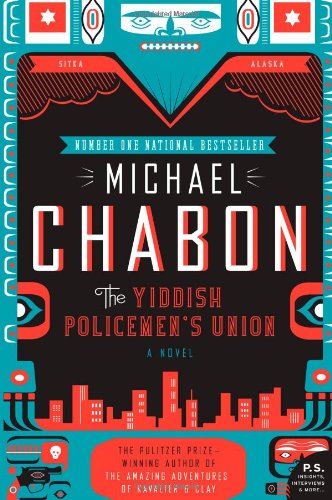
It doesn't count, as it's not on the list, but I finished The Yiddish Policemen's Union by Michael Chabon, and felt I owed some kind of follow-up seeing as I bitched about it a couple posts back.
The story did not show substance until the last quarter of the entire novel, wherein suddenly it got incredibly sad and lonely all in the matter of a single scene. I think Chabon's flowery style does injustice to his story as well, as sifting through all of the similes and metaphors and poetic likenings were extremely tiresome and hard to focus on. I doubt that a single sentence in the entire book (not counting dialogue) was exempt from this characteristic, and it's strange to compare that to the actual plot or the personalities of its characters. I imagine Chabon to be a (well-deserved) cocky ego-maniac; something like Oprah - who's entire t.v. studio waiting area where audience members are forced to wait in line for hours before entering the studio for a taping is covered in glamour shots of herself. Though once again, having a conversation with Oprah seems much less insufferable. This image I have worked up is in no way based on reality though, so I may be eating my words in the future if I ever get confronted by an angry (or gracious) Michael Chabon.
I have recently come across so many books that redeem themselves right at the very end, and I'm not sure whether that's genius or cruel. Genius because it is the last thing the reader remembers, or cruel because you made the reader suffer through hundreds of pages of a long irrelevant ramble. The entire "mystery" that the plot revolves around also kind of seemed like a half-hearted ploy to develop character relationships, and that seemed weird to me because of how much extra work that must have taken rather than just to have made a story about a few detectives and their thoughts/pasts. A friend who's literary opinion I hold valuable recently told me that from what he remembers, he rather enjoyed the book (sans the romantic prose of course), so perhaps to each his own.
The story did not show substance until the last quarter of the entire novel, wherein suddenly it got incredibly sad and lonely all in the matter of a single scene. I think Chabon's flowery style does injustice to his story as well, as sifting through all of the similes and metaphors and poetic likenings were extremely tiresome and hard to focus on. I doubt that a single sentence in the entire book (not counting dialogue) was exempt from this characteristic, and it's strange to compare that to the actual plot or the personalities of its characters. I imagine Chabon to be a (well-deserved) cocky ego-maniac; something like Oprah - who's entire t.v. studio waiting area where audience members are forced to wait in line for hours before entering the studio for a taping is covered in glamour shots of herself. Though once again, having a conversation with Oprah seems much less insufferable. This image I have worked up is in no way based on reality though, so I may be eating my words in the future if I ever get confronted by an angry (or gracious) Michael Chabon.
I have recently come across so many books that redeem themselves right at the very end, and I'm not sure whether that's genius or cruel. Genius because it is the last thing the reader remembers, or cruel because you made the reader suffer through hundreds of pages of a long irrelevant ramble. The entire "mystery" that the plot revolves around also kind of seemed like a half-hearted ploy to develop character relationships, and that seemed weird to me because of how much extra work that must have taken rather than just to have made a story about a few detectives and their thoughts/pasts. A friend who's literary opinion I hold valuable recently told me that from what he remembers, he rather enjoyed the book (sans the romantic prose of course), so perhaps to each his own.
Tuesday, August 6, 2013
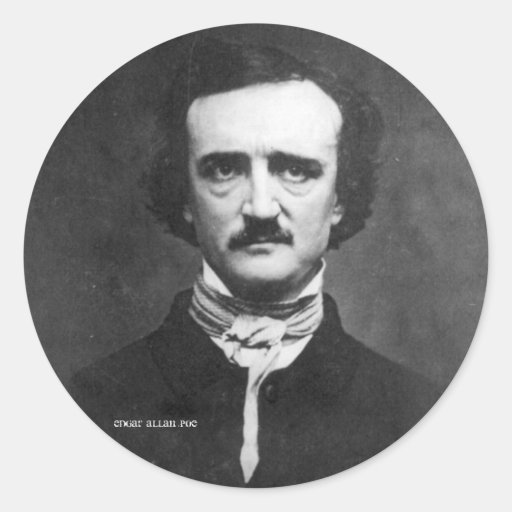
Edgar Allan Poe
The Pit and the Pendulum definitely has that iconic Poe voice. Very dark and anxious with a lot left for interpretation. It's a nice little climactic scene with even a bit of fantasy to it that touches on psychological workings. I think that the shortness of the story really works well for it and that the quick ending lends a lot of power to the buildup.
The Fall of the House of Usher is similar in these characteristics, but is haunting in a much more usual way (ghosts and mansions and the like). It reminded me of Hawthorne's The House of Seven Gables in its gothic style, though perhaps a lot of that also has to do with the fact that the titles to these stories are attributed to the houses. I'm not really sure what the point of this story was beside the fact that it was a mere form of entertainment, but I think I got more thrills from the former rather than The Fall even though it was more fitting to settings and topics that I usually prefer.
The Purloined Letter differs from these other two stories as it lacks the gloom that is so characteristic of Poe. In fact, it's got an excessive amount of "intelligent" ramble that just seems like showing off. It is, as a whole, a bit more lighthearted and comical but I don't think it engages as grippingly as the others do. There is an air of cockiness that doesn't fit the author well, and I don't think that the detective genre fits him well.
I think, in general, I'm just glad all of these stories were short.
The Fall of the House of Usher is similar in these characteristics, but is haunting in a much more usual way (ghosts and mansions and the like). It reminded me of Hawthorne's The House of Seven Gables in its gothic style, though perhaps a lot of that also has to do with the fact that the titles to these stories are attributed to the houses. I'm not really sure what the point of this story was beside the fact that it was a mere form of entertainment, but I think I got more thrills from the former rather than The Fall even though it was more fitting to settings and topics that I usually prefer.
The Purloined Letter differs from these other two stories as it lacks the gloom that is so characteristic of Poe. In fact, it's got an excessive amount of "intelligent" ramble that just seems like showing off. It is, as a whole, a bit more lighthearted and comical but I don't think it engages as grippingly as the others do. There is an air of cockiness that doesn't fit the author well, and I don't think that the detective genre fits him well.
I think, in general, I'm just glad all of these stories were short.
Monday, July 22, 2013
The Nose
Read Nikolai Gogol's The Nose yesterday on some stolen time. It read very much like The Third Policeman and I just envisioned my old Scottish co-worker friend chuckling to himself as he read this. It's kind of just a nonsensical three-part short story. Literally, a nose leaves its owner's face, turns up in a bread roll, then is somehow human-size and is wearing fancy attire as it trots away in a carriage. After all that, it miraculously appears back on its homestead face. I'm not even sure that there is any point at all. I looked it up thinking that perhaps it was a satirical commentary about society or the upper class but it doesn't really seem to be the case. There was something about masculinity and shallowness/materialism that seemed probable but in the end it might just be that Gogol was just being silly and getting paid to do it.
Outside of that, I have been trying to read Michael Chabon's The Yiddish Policemen's Union for the past few weeks but quite frankly, it's boring. BY GOD, it's so boring. I even looked it up on Wikipedia to see if I'm missing something and the only thing that I found helpful is that supposedly the Coen brothers were going to make a movie based on this book but then scrapped the script they had initially written. EVEN THE COEN BROTHERS CAN'T MAKE THIS BOOK WORTH WATCHING. If such talented gods can't even save it, it's hopeless I say! I'll probably just keep trucking at it out of sheer stubbornness until I die of boredom. Then I will rue this day.
Saturday, July 6, 2013
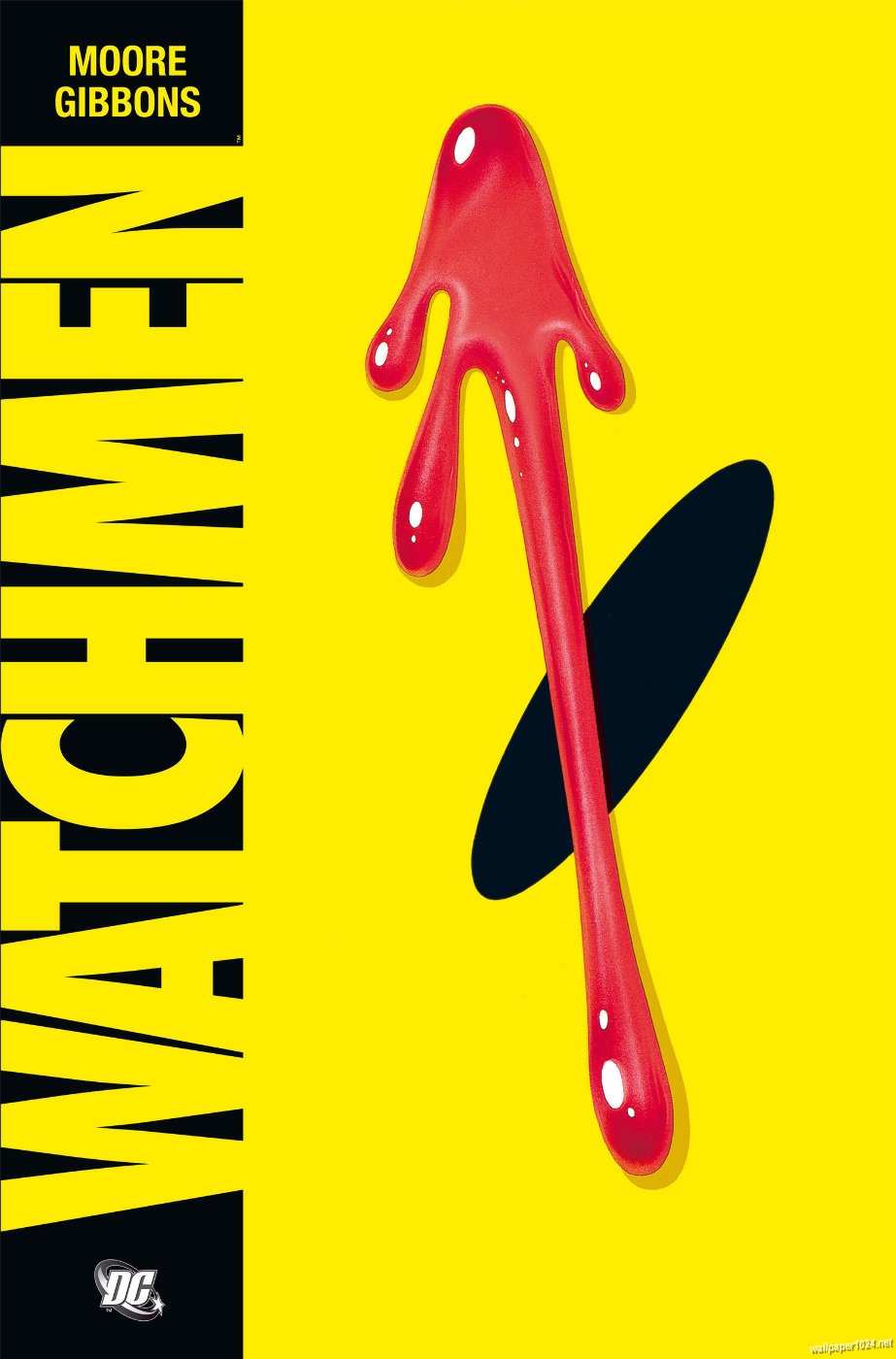
Watchmen
Up to 95/1001 now! Wooooooo.
So...I guess I like this? I really don't know what to say. For some reason I like Rorschach the most and I feel like that makes me fucked up.
For the pace that it started off with, the ending seemed abrupt to me. I was kind of left thinking "...oh, is that the end?". For the majority of the book, it was at a really nice tempo with layered plots and character development, but once Veidt's plan was uncovered it seemed like it was kind of like "and he killed everyone and now the story is over and there is nothing else to explain or talk about, and everyone is just going to go their separate ways with little explanation". It kind of felt like a letdown.
There's a lot of violence, but it wasn't all that disturbing to me. The images were often gruesome and all but it somehow fit the grittiness so that you were never really shocked, which I kind of think is nice. There was also a lot of silhouettes of couples making out or having sex but I feel like with that part I was missing something. Maybe he just wanted NYC to be a city full of vices? Still, that seems too simple. Also, the smiley face. Was I just not paying attention, or was that never explained? Maybe I didn't have enough patience for all of these details...maybe I should go back and re-read. I'd kind of rather someone just tell me.
So anyway, I assume those movies/comics like Kick-Ass and Super and other lives-of-superheroes as real people type stories are all probably somewhat influenced by this. It's an interesting concept, and if Alan Moore was the first to think of it, that's pretty cool. I know that comic people love him and think he's a genius so I wouldn't put it past giving him that credit.
On an unrelated topic I went to Barnes and Noble to try to find some books and that store is SO FREAKING USELESS. I had about 10 titles to try to find, expecting that I wouldn't be able to find the majority of them but I could literally only find ONE. What the heck!? I guess I'm just going the Amazon route from now on.
So...I guess I like this? I really don't know what to say. For some reason I like Rorschach the most and I feel like that makes me fucked up.
For the pace that it started off with, the ending seemed abrupt to me. I was kind of left thinking "...oh, is that the end?". For the majority of the book, it was at a really nice tempo with layered plots and character development, but once Veidt's plan was uncovered it seemed like it was kind of like "and he killed everyone and now the story is over and there is nothing else to explain or talk about, and everyone is just going to go their separate ways with little explanation". It kind of felt like a letdown.
There's a lot of violence, but it wasn't all that disturbing to me. The images were often gruesome and all but it somehow fit the grittiness so that you were never really shocked, which I kind of think is nice. There was also a lot of silhouettes of couples making out or having sex but I feel like with that part I was missing something. Maybe he just wanted NYC to be a city full of vices? Still, that seems too simple. Also, the smiley face. Was I just not paying attention, or was that never explained? Maybe I didn't have enough patience for all of these details...maybe I should go back and re-read. I'd kind of rather someone just tell me.
So anyway, I assume those movies/comics like Kick-Ass and Super and other lives-of-superheroes as real people type stories are all probably somewhat influenced by this. It's an interesting concept, and if Alan Moore was the first to think of it, that's pretty cool. I know that comic people love him and think he's a genius so I wouldn't put it past giving him that credit.
On an unrelated topic I went to Barnes and Noble to try to find some books and that store is SO FREAKING USELESS. I had about 10 titles to try to find, expecting that I wouldn't be able to find the majority of them but I could literally only find ONE. What the heck!? I guess I'm just going the Amazon route from now on.
Tuesday, July 2, 2013
A Fine Balance
I suppose this story is about friendship and love through hardship, but what's coming in loud and clear is that life is hopeless so you should just give up. This is hard to grasp as an entitled asian girl in America who's family always had money and therefore had the means to keep working at getting what she wants with certainty that someday it could be attained, but as a poor person in 1975 India, I'd say that motto of "just stop trying" is pretty accurate and that basically dying was a better alternative to trying to climb the social ladder, or even to keep on living. This was supported by insane amounts of violence between religious groups and poor people, government officials and poor people, and then some weird tensions between student activists and some entity I didn't quite understand (potentially more government assholes).
If there is a movie of this book, I never want to see it because I would have nightmares forever.
Also, there is a person who is basically a pimp for beggars who's name is Beggarmaster. He keeps all of the money he collects in a suitcase that is chained to his wrist. This is not a joke and no one seems to find this strangely hilarious. He also happens to be one of the nicest characters in this book so seriously, what I'm getting at here, is India was pretty fucked up.
This was the last book I had left from Colleen's generous gift. This means I need new books. My birthday happens to be two weeks away. Wink wink.
Tuesday, June 4, 2013
Call It Sleep
Bluntly speaking, I do not like Call It Sleep by Henry Roth. It is, to be fair, very skilled in conveying a very true adolescent, but this perhaps reveals that I do not like real children (which really is no surprise). I found David Schearl to be whiney, spineless, and overly attached to his mother, which really bothers and freaks me out. I do not understand or handle well people who have strange obsessions with their parents, and it makes me very uncomfortable.
I suppose it would seem that I am being unfair by identifying a 6-9 year old boy as being annoyingly dependent, but in comparison to the other boys that surround him, Davy has been guarded from maturity because of his mother's affection. There must be a point in a child's life where he realizes he wants to be a part of others his age, I think, but it never really seems to happen with this main character. Case in point, this kid creeps me out.
Roth also does some stylistically out-of-the-box things like characterizing accents through phonetic spelling, capturing David's internal thought process through jumbled, fast moving nonsense, as well as a scene toward the end where two separate situations are woven between themselves in abrupt cuts until they collide at the climax. However avant-garde this may be (I'm blindly assuming that to be true), it was for me, very annoying and I often found myself scanning and skipping these sections because they were so hard to read, confusing, and ultimately unimportant to the bigger picture (forgettable, for lack of a better word).
The only part of the book that I found interesting was the first section, which I found to be very pretty and emotional. Not so coincidentally, this is the only section that is not written from the child's point of view. When the father tosses the child's hat overboard, it is an immensely weighted moment, and I commend Roth for such a well played choice of action for Albert Schearl to do to his newly reunited family. Props.
What I do like more than this scene, is when people share their love for a book in a very convincing manner. There is an afterword by Walter Allen in my copy that was so well-written that I started to appreciate some of his points, though not to the point that it would make me forget all of the unpleasantness I felt throughout my read.
Also, as a side-note, my copy is from 1971 and the pages look ribbed/textured when held up to the light. I am incredibly fascinated by this -- there is a sense of corrosion as well as a very handmade feel to it that I am drawn to. Also, I really like the cover image of clothes drying on a line.
I suppose it would seem that I am being unfair by identifying a 6-9 year old boy as being annoyingly dependent, but in comparison to the other boys that surround him, Davy has been guarded from maturity because of his mother's affection. There must be a point in a child's life where he realizes he wants to be a part of others his age, I think, but it never really seems to happen with this main character. Case in point, this kid creeps me out.
Roth also does some stylistically out-of-the-box things like characterizing accents through phonetic spelling, capturing David's internal thought process through jumbled, fast moving nonsense, as well as a scene toward the end where two separate situations are woven between themselves in abrupt cuts until they collide at the climax. However avant-garde this may be (I'm blindly assuming that to be true), it was for me, very annoying and I often found myself scanning and skipping these sections because they were so hard to read, confusing, and ultimately unimportant to the bigger picture (forgettable, for lack of a better word).
The only part of the book that I found interesting was the first section, which I found to be very pretty and emotional. Not so coincidentally, this is the only section that is not written from the child's point of view. When the father tosses the child's hat overboard, it is an immensely weighted moment, and I commend Roth for such a well played choice of action for Albert Schearl to do to his newly reunited family. Props.
What I do like more than this scene, is when people share their love for a book in a very convincing manner. There is an afterword by Walter Allen in my copy that was so well-written that I started to appreciate some of his points, though not to the point that it would make me forget all of the unpleasantness I felt throughout my read.
Also, as a side-note, my copy is from 1971 and the pages look ribbed/textured when held up to the light. I am incredibly fascinated by this -- there is a sense of corrosion as well as a very handmade feel to it that I am drawn to. Also, I really like the cover image of clothes drying on a line.
Subscribe to:
Posts (Atom)