Wednesday, June 1, 2011

Wishing for someone to endow me with great sums of money

Damn me for not aiding convicts in graveyards at a young age. What was I doing instead? Playing with stuffed animals? Mistake. Maybe then I would have been rich by now. Not to mention, a respectable lady.

I enjoyed Great Expectations very much, and thought it rather darkly compelling in a sunlit way (if that is to be taken with the mindset that I am a fan of American gothic) with the misshapen faces in Jaggers' office (as well as Jaggers himself, and Ms. Havisham too) serving as the centerpoint for such moods.

I really honestly like most of the characters in this story. Favorite = Wemmick. Runner up = Herbert. Obviously. These characters are so fleshed out and amiable that one cannot help but to love them dearly. The working up to Wopsle's wedding was basically the cutest thing to ever happen (Halloa!).
Pumblechook, I disliked immensely, in not a hateful way, but more of an annoyance in a way that in the moments where he was introduced into the text, I was hurriedly reading waiting for him to take leave. He is like that annoying fly buzzing around your head that you want to ignore but simultaneously irritates you to the point of outrage until you cannot leave it alone (and must act out on, as Pip does). Estella, too, I could not grow to like as she was a very flat character, dismissible herself -- in just the way that she could not take to any man, I found no fondness for her.

I was not pleased with the ending, which seemed faded and like an afterthought. The version I was reading held Dickens' original ending without a marriage, and though I understand that the latter was frowned upon, I would have to say that the original is not much better. To spoil such a wonderful novel as the rest of it proved to be with such a quick end was a discredit, I think, mostly because Dickens' ability to end romantically was prevalent in other chapters: "At about six o'clock of the morning therefore, I leaned over her and touched her lips with mine, just as they said, not stopping for being touched, 'Take the pencil and write under my name, 'I forgive her.'" (Chapter XLIX), as well as the chapter containing Provis' death.

Speaking of romanticism, I finally cracked open J.S. Foer's very expensive paperback. Fragile to read, as the pages were often tangled upon themselves, but interesting to look at. The narration was poetic in a way that Foer is a master at, but the afterword, to me, was the more compelling. This man is a sensitive genius, I swear it, and I love everything he has to say through prose. His soul is beautiful, and he makes being Jewish a profoundly poetic thing. And he should rightly be very proud.

Thursday, May 5, 2011

From Killick-Claw to London


Finished Annie Proulx's The Shipping News (#133) yesterday. I really enjoyed this one; duly deserving of all its pomp and fanfare of awards and titles. What a pleasant read: subtle plot, complex and realistically human emotions, a fine balance of fantasy and reality, and thoughtful humor. Quoyle, the protagonist, is simultaneously tragically pitiful and yet endearing and surprisingly lovable (the fact that he is such a good father melts the heart), and there is a tenderness in Bunny that is very maturely drawn.

This is a book that makes me glad for text - I would not ever want to see this novel in its movie form. I can picture Quoyle and Wavey, but harbor not an ounce of desire to see them as a real-life entity represented by actors. They are like beautiful dreams or paintings in my head, sharp yet blurred at the same time in a complex way that I wish to remain so.

I have great respect for Proulx. Her imagery (and therefore, her imagination) is so vibrantly fresh and unconventional. Take this example, in Chapter 7 (The Gammy Bird); "...the wall behind him covered with oilcloth the color of insect wings. His face: wood engraved with fanned lines...Bushy eyebrows, a roach of hair the color of an antique watch". The book's end, is my favorite. How gracefully she managed it: "For if Jack Buggit could escape from the pickle jar, if a bird with a broken neck could fly away, what else might be possible? Water may be older than light...it may happen that a crab is caught with the shadow of a hand on its back, that the wind be imprisoned in a bit of knotted string. And it may be that love sometimes occurs without pain or misery".


So on my see-saw between eras, I now return back to the 1800s, with Dickens' Great Expectations. I am hoping that The Shipping News has started a trend, tunneling out of the darker, more pessimistically mooded stories, but considering the context of this book centering around an orphan, I am not exactly confident that it will be so. I should, also, probably know more about classics such as these already, but I will throw in the towel and acknowledge that I am a complete n00b to many literary classics. But hey, that's what I'm working on, by reading through this list, right?

Tuesday, April 12, 2011

Psychotic Two-Dimensional Characters Make Nami An Irate Girl

It's unfair to say that I gave Mr. Palahniuk a fair chance, having gone into this with a preset distaste for his writing. But honestly, he could have proved me wrong, delivering something substantial and interesting...albeit the "edgy" tone which is so common to him, and which I dislike (though can appreciate through my prejudice in other writers).

Palahniuk is compared to Vonnegut? I don't know about that. I rather think that he is a cliché and that he tries too hard to be crude in order to be cool - which, he doesn't accomplish well. Sex, grit, and insanity? Typical. Try to be a little more creative, please. First chapter was so overdone it was painful; calling the main character as an innocent child an array of bastardizing and profane adjectives is not new, interesting, or funny - it's just sad, because there is less respect that I can give C.P. for what he's doing. It isn't style, it's just a lack of talent in being able to make a weighted plot. I didn't give two shits about a single one of the characters in this book - and not in the way that the author would have liked. This only means that he doesn't know how to sculpt a character...to make them three dimensional, and actually human. And the excessive use of lists is just plain annoying. I was constantly begging for the last page to come.

It may not have been a wise decision, on my part, to be simultaneously reading two books about psychotic mothers either (not that I planned it this way), as I am now more than halfway through The Memory Palace. But that may be the problem in my aversion to these books; I don't like either, which is making my dissatisfaction at the both of them much greater than had I taken either of them alone.

Bartok's book isn't bad. In fact, her interests in topic and style are very similar to mine. What's bothersome, is the self-pity. On top of that, is the TERRIBLE editing, which I can't forgive. The spelling errors/typos are too numerous to go unnoticed (and although it is her first novel, it is not her first book). And on top of that, I don't like her art, which she has managed to not-so-nonchalantly scatter throughout the work. I envy her life (minus the schizophrenic mother): teaching at the Field Museum, going to Europe, becoming a somewhat successful artist, etc etc. She went to SAIC like me, and managed to do things that I only dream of doing (how the hell did she even get these gigs, I would like to know) and yet her art is not that good. Why!? Tell me, what the hell is it that my friends and I, post grad, are all doing wrong that this person can be as successful as she is? If it is just that she is exploiting her rough family life, then she will have to leave that heartache she's sparing for herself in due to her mother behind, as there are plenty of us with happy pasts who are struggling. The balance seems at this point, somewhat leveled. This all just comes down to bottom line, SOMEONE HIRE ME.

Not quite sure yet which book is next to continue on with the list, but it will be interesting to see where my mind will wander next in course of whatever it may be.

Monday, April 4, 2011

Having Been to the Galleys and Back

At an almost completely four month stint of living alongside Jean Valjean/M. Fauchlevant/M. Madeleine/etc etc, I have finally reached the end of the road. It was a very tragic and divine parting of ways, with the final scene depicted in the vein of a Chiaroscuro painting.

Hugo's characters are incredibly black and white. It is easy to hate the coal-hearted villains, but it was much more difficult for me to swallow the naivety and carelessness of the innocent (especially in Cosette, after her marriage - so Audrey Hepburn of her to be so blinded by love as to throw all other, more crushingly important and urgent matters out of mind). Even so, you cannot help but to love and admire them, and in the end, it is all resolved in the most pleasant of ways anyway, which is good, as I would not have liked to have ended a novel such as this on some kind of open ended or doomed situation, as modern writing may encourage. I don't mind that the characters are ideals, or that they are sometimes two-dimensional. I love Jean Valjean for his innate goodness, Fantine for her will, and Cosette for her innocence (Marius, on the other hand, was rather forgettable and lackluster...he is good, but his purity is unconvincingly adolescent).

The book for me was a welcome cliche of an escape. For moments at a time, I was not on the el on the way to a dead-end job at the Marriott, nor was I pondering all of the failures in my current state of affairs. It was, possibly for the first time (at least, in terms of causing me to think about it as it happened), that experience that people always describe reading as; an experience removed from reality, allowing me access to not so much actions and setting, but direct, weighted emotions that tied my real anxieties and happinesses in some kind of moving, full-circle way. To intermittently be Jean Valjean for four months was somewhat of a blessing, at this point in my life.

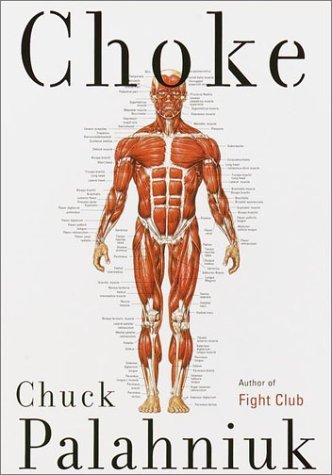
And now, time for me to make my way onward as other literary hero(in)es. Seeing as I have some sort of pattern going with classics, to (more) modern, and so forth, I will come back to an era closer to today. One of my best friends gifted to me numero quarante-huit, Choke by Chuck Palahniuk this past December (which, I am grateful for, as I do not have favorable ideas of him, and therefore would not have been happy to purchase the book myself), so I figure now is as good a time as any to test my thoughts on this author. Can I just say that Lullaby was atrocious, and almost unreadable? Disgusted. Still, I will give him another shot, as I have heard some good things about Choke (whether or not I trust their literary merit is up for grabs). I am expecting this read to go extremely quickly, by standards of his writing style.

On a side note, I have recently also acquired (among other books on the list, which will not be named until it is their turn to be read) The Memory Palace by Mira Bartok based off of an interesting review I read in some women's magazine I fail to remember now, as well as Jonathan Safran Foer (LOOOOVE!!!)'s Tree of Codes, a rendering/artistic take on Bruno Schulz's Street of Crocodiles (which I also intend on reading, once I can get my hands on it). I must confess I spent an absurd amount of money on the Safran Foer book, as it is a first edition, and am still hesitant to unwrap its original wrapping as if it were something holy. I will be making time to read these in between 1001 list projects.

Thursday, January 6, 2011

#873


Les Miserables! Victor Hugo! 829 pages, abridged! Vive la France! and...GO!

Tuesday, January 4, 2011

Chance Happenings and the Moon

Finished Moon Palace just now. Definitely my favorite of the lot, so far; I'm fond of the preposterousness of chance happenings worked through the plot, with its obvious scatterings of motif a la lune. And a cliffhanger ending too? Come on, cheese factor off the charts, but I'm eating it up.

On a side note, since we all know my obsession with Nathaniel Hawthorne, at one point in the novel (page 144 in this copy to be exact), a minor, untalented writer character is mentioned as the son of the Great. Brownie points for a good shout out with bad irony.

And then on page 122, a few things I had highlighted, as they seemed profound at the time of reading:
"The world enters us through our eyes, but we cannot make sense of it until it descends into our mouths".

and

"More to the point, the same brick was never really the same".

How philosophically artistic.

Finally, the book ends in a full moon behind Fogg. Can I just say that tomorrow is the full moon? At least, according to my new 2011 calendar.

On to further business, I have acquired a handful of new books (thanks to Christmas, and other CHANCE happenings that dropped Les Mis into my fateful hands) from the List to progress my reading for at least another couple months. I will be well-read in no time.

Tuesday, December 7, 2010

Parallels between Minami Furukawa and Marco Stanley Fogg:

  • Both somewhere around the age of twenty-something, living in a studio apartment.
  • Marco is living off of two eggs a day. The contents of my refrigerator right now: three eggs, a half packet of mozzarella cheese, three half bags of frozen vegetables, juice, milk, a six pack of holiday ale, and various condiments (useless, as I have nothing to use them on). My cupboard is not any more impressive; two packets of ramen noodles, half a loaf of bread, a can of creamed corn. I do however, have a bowl full of fruit which I have been sustaining myself on when I have to eat at home (I fortunately get fed at work every shift, so that limits the amount of grocery shopping I need to do).
  • Marco’s uncle was a traveling musician playing clarinet. I played clarinet for eight years, having to give it up for art school.
  • (page 41, chapter 1) “I had lost the ability to think ahead, and no matter how hard I tried to imagine the future, I could not see it…the only future that had ever belonged to me was the present I was living in now, and the struggle to remain in that present had gradually overwhelmed the rest…if life was a story…and each man was the author of his own story, then I was making it up as I went along…the question was what I was supposed to do when the pen ran out of ink”.
I had been thinking about the future plenty hard before I had taken my recent job at the JW Marriott, applying to writing jobs every day and considering grad school. That is all out the window now, as I am so busy between work and sleep (because I sometimes have to wake up at 3.30am for work, not because I am a hibernating good-for-nothing) and starting up an artist business venture with a group of friends. There is no time for thoughts of having a real career, and at this rate I am on my way to becoming a 60-something with a degree, whose only job has ever been in the food industry.
  • Marco is not an artist, but drawing back on Gordon Comstock, I am creating for no reason but to keep the habit. However, in vein of both he and Marco, I am in a bit of a financial decline to the point that I have had to rule out buying Christmas presents for the parents (and I am on a budget for the besties). In consolation, I have decided to give them a painting in the usual purchases’ place.

Here are some of the things I have been working on for the past month+, just for kicks.


(Though I am nothing even close to anything resembling a true painter, that giant dark blob on the left was exhilarating to paint, and it brought me closer to understanding artists like DeKooning, whom I have hated for years).


Let's hope I don't end up living in Lincoln Park like Marco does (though in the much more impressive Central Park), or if it comes to that, that my friends bail me out before it happens (I like to believe I have a few Zimmers and Kittys--Fogg's support group--in my life).