Saturday, March 14, 2015

Sputnik Sweetheart

More Murakami!  There's another one to go, but don't worry, I'm going to take a break before I go on to that one.

I like Sputnik Sweetheart the most out of the three Haruki Murakami books I've read so far, I think.  I'm not sure if it was because the translation was done by someone else (Philip Gabriel - the first two were by Jay Rubin), or if Murakami actually wrote in a different style relative to the personality of the characters, but this novel read in a much more welcoming, casual vibe.  It's still surreal, but stays on topic more than his other works, with a clear plot and more importantly, the characters seem to have true feelings.

The fact that one of the main characters is a lesbian, too, gives a refreshing modern angle to the book.  Even now, I don't think characters such as Sumire exist very often in culture in patriarchal Japan which made it all the more enjoyable to see a free-spirited, "hipster" girl amid the frigid, mechanical women of Murakami's usual worlds.  This misfit quality gave her even more life, in a way that I don't think I would really have appreciated had I not read the author's other works beforehand.

The loneliness of existence seems to be a common theme in Murakami's works, but its clear that it isn't something he's trying to solve or explain.  It feels more like he's simply inviting you into a friendly (mostly one-sided) conversation for a few minutes to gage your reaction.  Maybe you'll quietly listen, or maybe even agree with him - I think that's what would give him the most pleasure.

Friday, March 6, 2015

After the Quake

After obsessing over The Wind-Up Bird Chronicle, I binge bought all of the Murakami titles on the 1001 list.  As the books I've ordered trickle in, I started on After the Quake.  It is a collection of 6 short stories with minor ties to the 1995 Kobe earthquake.

The first story, ufo in kushiro, was so similar to Wind-Up Bird that my initial reaction to the collection was a tired disappointment.  However, as the other stories opened up, I was happy to see that Murakami does clearly have creativity beyond one story line and has a talent for evoking wonder with mysterious fantasy-like scenarios.

It's hard not to think of the Fukushima earthquake and tsunami in 2015 while reading about lives affected by a large scale disaster in Japan.  You don't really think about how such an event affects people who are indirectly tied to it, and Murakami does this in a crafty way that makes you think.  None of his characters have suffered the loss of a loved one by the earthquake, but all of their buried pasts are brought to the surface in haunting ways.

I think part of the strangeness in Murakami's writing is that all of his characters never seem fundamentally Japanese.  Any references to brand names, literature, and culture is always reflective of Western culture.  Even the food that they eat is European/American (why is it always spaghetti??).  I'd be interested to read it in the original language to see if it translates differently, although unfortunately my skills with Japanese text are not so advanced.

In relation to that, one thing that bothers me is the use of the phrase "don't let it bother you too much" that gets used constantly in Jay Rubin's translations of the female characters in Murakami's books.  I don't know what the original Japanese term was from which it came, but this particular choice of words bothers me.  It seems to cold and unapologetic, something that I can't imagine creeping in to Japanese speech as often as it does in these stories.  But then again, I guess women are cold enough in Murakami's world to constantly be disappearing/leaving in.  I wonder if it reflects on his personal life.

Wednesday, March 4, 2015

Mrs. Dalloway

I knew nothing about Virginia Woolf save the fame of her name a week ago, and I must admit, after reading what Google pointed to as the easiest to read for Woolf beginners; Mrs. Dalloway, I still don't have a clear  understanding of what she's supposed to represent.

What to say?  The novel is incredibly fluid, changing from one character's point of view to the next's with the theatrical style of a camera swinging in one seamless move.  It's remarkable, really, as you hardly realize it's happening until it has, and your mind has to play catch-up.

The fact that the main characters are elderly came as a shock to me as well.  It so rarely happens, and even less so when it relates to the bourgeois and events like fancy dinner parties.  I must say the fact that my book's cover had a photograph of ladies in their twenties did not help the matter.

I enjoyed the moments shared between Peter and Sally best.  And though I cannot say I was especially pulled by the novel as a whole, the final section was provoking.  I like the draw of the past, and the reality of emotions vs. rationality in fiction because one cannot really experience that of other people in real life.  Life choices...am I right?

Thursday, February 26, 2015

The Wind-Up Bird Chronicle

I have been avoiding Murakami for the past 6-7 years now, ever since I noticed it becoming so prominently featured in American bookstores for that simple fact alone.  Having finally read one now, I can honestly say that the decision I had been making was a stupid one.

It has been a very long time since I have been so engaged in a book.  I felt sincerely sorry as the pages in my right hand grew fewer in number, but yet propelled to continue further and to let the story continue.  Simply speaking, I loved the experience I had with this book.  So much so, that although I have other books to start ready to go, I may just go to the book store and buy more Murakami novels in order to feed this new passion that has been lit within me.

The Wind-Up Bird Chronicle is surreal in a way that stands out from other stories that might be compared to it.  Murakami is able to manipulate emotion in a way that I have rarely experienced before in reading: there are parts that are incredibly graphic and grotesque, yet simultaneously warmly enveloping.  In the same way, there are other parts that are beautifully poetic yet cause an emotional discomfort that is hard to describe.

Almost all of Murakami's characters are chatty.  This is another unusual way in which the author builds the novel.  We learn the stories of each character from their own words, simply because they all tend to overshare while getting to the point of something completely off-topic.  As far as I'm concerned, I have never experienced a writing style like this before, and as a writer who struggles with dialogue, I admire it.

My only regret is that the story did not end with a clear wrap-up of the countless number of loose threads presented throughout the book.  In the end, Murakami chose not to approach reason, but somehow it did not offend me in the way that other books do when they leave plot holes unfilled. Like the tentacles of the jellyfish that Toru Okada so feared, all of the questions I had built up remained gently swaying in the dark with ominous mystery.  Somehow, though, it just worked.

Sunday, February 15, 2015

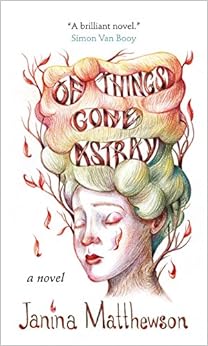
Detour: Of Things Gone Astray

I went to the bookstore yesterday with the intent of buying some books from the list, but having only been able to find 2 of the 3 I was seeking, I picked up a new book which I honestly just chose based on looks.

Of Things Gone Astray by Janina Matthewson, in a very one-dimensional view, is written in a generically "new fiction" way that is so common now in artsy hipster-indie fiction.  "Strangers" simultaneously have a traumatic experience happen to them, and their stories become interwoven without their directly knowing it.  It has that very attractive, melancholy tone that I am drawn to, that lends itself to fantasy similar to The Boy Detective Fails by Joe Meno.

The beginning of the book, though enjoyable, honestly did not find me very impressed.  It felt familiarly sugary to me in a way that reminded me of my own writing.  As the story progressed however, certain moments of sweetness and creativity revealed themselves in rather impressive (for lack of a better term) ways.  It is a quiet, emotional book with extremely likable characters.

Personally, it was a good weekend to be reminded that things get lost and found all the time, but life keeps going on.  You must keep living it, you know?

Monday, February 2, 2015

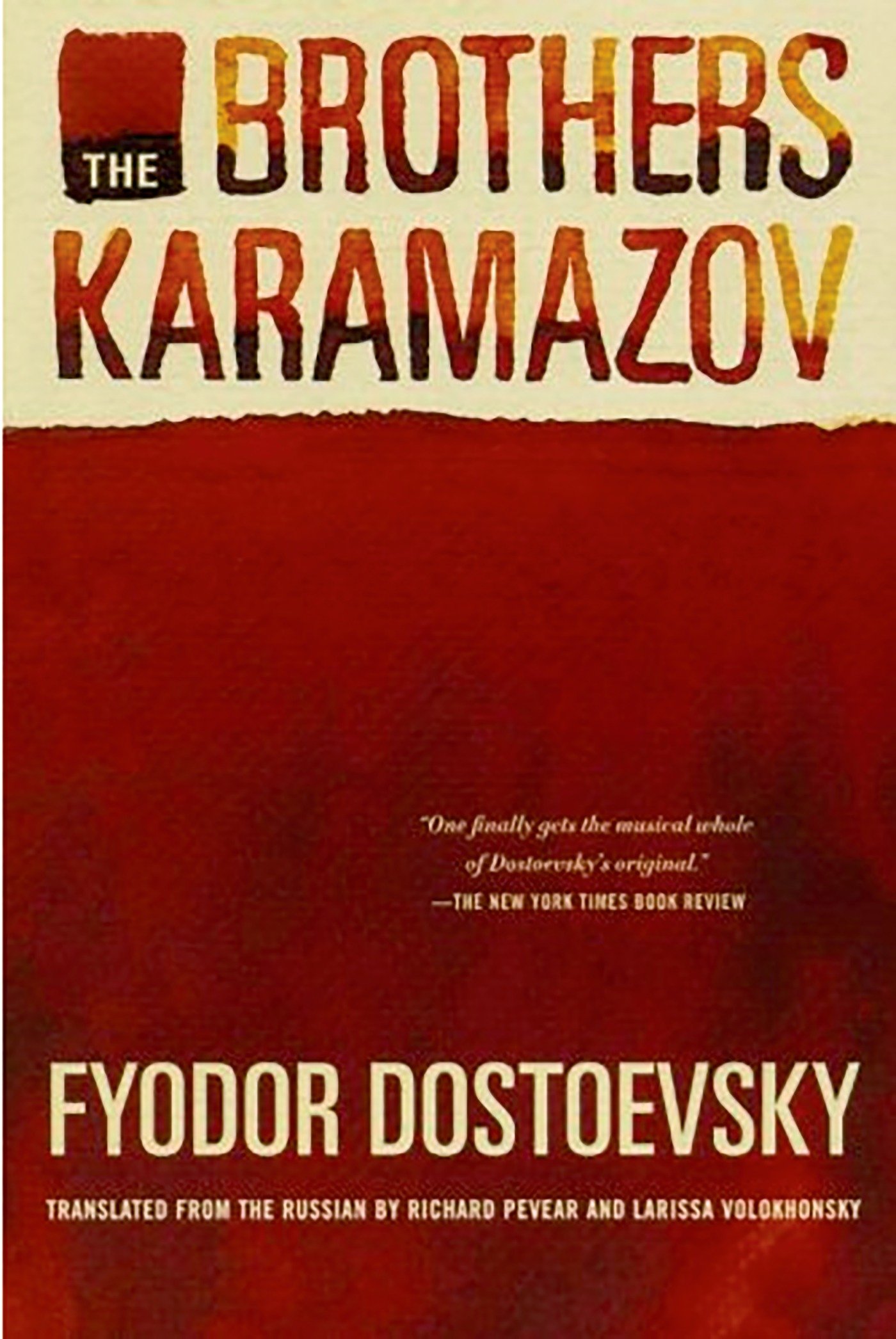
The Brothers Karamazov

It felt like an irrationally long time that it took me to read this book, but having gone back and seen my last post, I see it has only been the duration of 3 months.  Long, yes, but not the eternity it seemed.

I have read Dostoevsky before, albeit in high school, and in comparison, this one felt so much more humorous and playful.  Of course, it may just be that the in my youth I was too inexperienced with literature (not to mention so emo) to understand the subtleties of the writer's wordsmithing, or it may even have been the fault of whatever translator's rendition of Crime and Punishment that I experienced, but the cold and harsh story that I remember in that case is something of a completely different world compared to this edition of The Brothers.  It is important to note here, that this copy in question was translated by Richard Pevear and Larissa Volokhonsky whom I have raved about before.

In short, I found it delightful that there could be so much "fun" in a russian murder mystery (for lack of a better term).  It felt a bit like self-deprecation of Dostoevsky's own genre, while also challenging so much of what would be commonplace like religion and devotion (in all respects).  And oh, the drama.  If only we could be so outwardly passionate and yet fickle in our daily lives and fall into fits as often, maybe we would all be a little less uptight.

I must say, I could have done with the speeches being cut to a third of what they were though.  I know, I know, it's Russian literature.  I stand my ground.  Especially when there wasn't a single mention of snow in 776 pages.


Monday, October 13, 2014

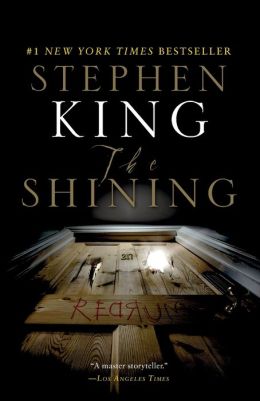
The Shining

Is Kubrick just effing up books left and right or what?  Okay, I can't actually speak because I have never watched A Clockwork Orange, but as you saw from my last post, I touched on how he sort of changed the story in the face of the public for that novel as well.  I kind of feel like he doesn't read books at all but rather has a friend who read the book tell him the major points and then creates something from there.

I'd heard somewhere before that Stephen King's The Shining was different from Kubrick's film, but somehow I wasn't really expecting much of a difference.  I pretty much just expected Wendy's hair color to be the only thing that would stray from the movie, but luckily that was not even close to the reality.  I also honestly expected King's writing to be quite bad as most horror/popular fiction writing is, but I was pleasantly surprised in this arena as well.

Let's face it.  No matter how much you love the cult film, a lot of shit in the movie doesn't make any sense.  What the hell is Danny's power exactly, and what is the point of Tony besides to say "redrum" creepily for 3 seconds?  Who are the random ghosts that pretty much do nothing but stand there looking at the family from time to time?  Why is a caretaker even necessary?  I mean, I know Kubrick was being artsy and making social commentary and whatever, but it kind of just feels like a jumble of half-baked "concept" that doesn't really come together.  I'm not even trying to bash on Kubrick either, as I enjoy a lot of his films, but he really did create something completely different and lacking in comparison to the original story (but at least the opening credits scene was pretty magnificent).

The book focuses much more heavily on the characters and their back stories.  There are supernatural aspects to it, yes, but the bulk of what's haunting these characters is mental and touches on their personal guilt and paranoia.  There is a much more cohesive understanding of the characters and why they act the way they do, and it's never just a black and white situation of "hey, this guy goes crazy and just wants to kill his family".  The ghosts even have a story, and there's a fine line between hallucination and supernatural activity that convinces you enough to buy that perhaps the story is not all about a haunted hotel.  You guys, it all freakin' makes sense together, and it's better than I expected.