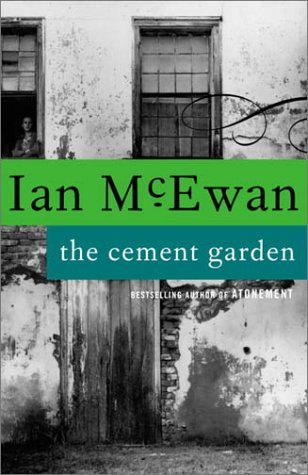
So. Fucked. Up.
Such creepy little children star in this novel and I feel like they violated me. The back cover of my copy says "Ian McEwan excavates the ruins of childhood and uncovers things that most adults have spent a lifetime forgetting -- or denying". Excuse me? MOST adults? What adults are out there hiding the fact that they shoved their dead relative in a cement casing and left them in the basement, while they touched their naked siblings in front of a six year old? And why is Jack such a fucking dick? Jesus christ, no consequences in this world of McEwan's, I tell you (yeah, yeah, I know, the end).
I'm thoroughly creeped out by McEwan now as I think back on all of the other books I've read by him. I feel like he has this weird thing with "naughty" children that's perverse and disturbing. With that said, there's still five (FIVE!?) books left on the list with his name on them. I feel like this is completely unfair of the list and totally biased, but hey, who am I to say.
I mean, I guess he did a good job writing an interesting story that successfully haunts you, but man, I want this book far away from me.
A writer's conversations & response to the 1001 Books You Must Read Before You Die list.
Friday, August 21, 2015
Thursday, August 20, 2015
The Hours
Lovelovelovelovelovelove
I adore Michael Cunningham's The Hours. He writes in the female perspective in such a relatable way, it seems more honest a job than I could ever do as a woman myself. The Hours makes ordinary thoughts so tragic with an irresistibly everyday beauty. His voice was so effortlessly intimate that it felt like it was always me only, alone with and quietly guarding each character, sharing a profoundly close yet unnoticed (by them) interaction with them.
Not only does it stand by itself in its charm, but this book made me appreciate Woolf's Mrs. Dalloway in a way that I couldn't achieve on my own. That's skill, if I may. Cunningham seamlessly weaves plot points and themes from one narrative to the next, while echoing pages from Woolf's own novel, jarring personal memories of familiar yet distant pages. It causes a strange effort to interact with the story, activating personal uncertainties and deja vu, scanning your own mind for real or invented memories. On top of all that, Cunningham's ability to blend fact and fiction into one beautiful concoction wins trust somehow, inviting one to stay awhile and let go, soak it all in and steep in it.
Who hasn't at one time felt the desperation that Virginia, Clarissa, and Laura have felt? There is comfort in knowing that one is rather ordinary, after all.
I will most definitely be watching the film this weekend to keep my love affair for this one going.
I adore Michael Cunningham's The Hours. He writes in the female perspective in such a relatable way, it seems more honest a job than I could ever do as a woman myself. The Hours makes ordinary thoughts so tragic with an irresistibly everyday beauty. His voice was so effortlessly intimate that it felt like it was always me only, alone with and quietly guarding each character, sharing a profoundly close yet unnoticed (by them) interaction with them.
Not only does it stand by itself in its charm, but this book made me appreciate Woolf's Mrs. Dalloway in a way that I couldn't achieve on my own. That's skill, if I may. Cunningham seamlessly weaves plot points and themes from one narrative to the next, while echoing pages from Woolf's own novel, jarring personal memories of familiar yet distant pages. It causes a strange effort to interact with the story, activating personal uncertainties and deja vu, scanning your own mind for real or invented memories. On top of all that, Cunningham's ability to blend fact and fiction into one beautiful concoction wins trust somehow, inviting one to stay awhile and let go, soak it all in and steep in it.
Who hasn't at one time felt the desperation that Virginia, Clarissa, and Laura have felt? There is comfort in knowing that one is rather ordinary, after all.
I will most definitely be watching the film this weekend to keep my love affair for this one going.
Sunday, August 9, 2015
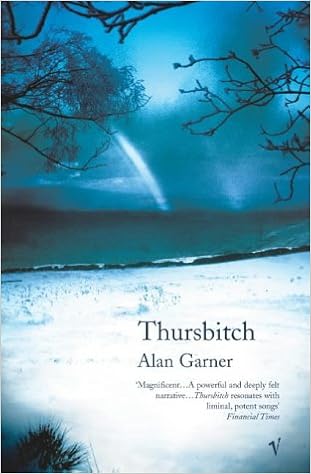
Thursbitch
After a long and empty novel, a short but powerful one.
What a haunting little book Thursbitch by Alan Garner is. The narrative is melodic, with a darkness that hangs over you like a heavy blanket. The story alternates between two timelines; Jake Turner's in the 1700s, and a more modern one, both set in Thursbitch, a mysterious English valley. The dialect in the former narrative is a bit hard to understand as it is an old regional English that sounds a bit Irish to me (forgive me for my ignorance), and as the book opens with Turner's story, I was at first wary to embrace the book. But Garner's ability to weave plotlines from past to present had a refreshing outcome that kept the story from becoming too tiresome, and had me more and more engaged as the pages were turned.
A bit of fantasy and plenty of drama, the book is less of a mystery as I first thought it would be, than an updated folktale. The transformation of Turner from a loving husband to a raving madman is emotional and beautiful, and the stillness of the landscape is a powerful contrast to this. Artfully done.
What a haunting little book Thursbitch by Alan Garner is. The narrative is melodic, with a darkness that hangs over you like a heavy blanket. The story alternates between two timelines; Jake Turner's in the 1700s, and a more modern one, both set in Thursbitch, a mysterious English valley. The dialect in the former narrative is a bit hard to understand as it is an old regional English that sounds a bit Irish to me (forgive me for my ignorance), and as the book opens with Turner's story, I was at first wary to embrace the book. But Garner's ability to weave plotlines from past to present had a refreshing outcome that kept the story from becoming too tiresome, and had me more and more engaged as the pages were turned.
A bit of fantasy and plenty of drama, the book is less of a mystery as I first thought it would be, than an updated folktale. The transformation of Turner from a loving husband to a raving madman is emotional and beautiful, and the stillness of the landscape is a powerful contrast to this. Artfully done.
Wednesday, August 5, 2015
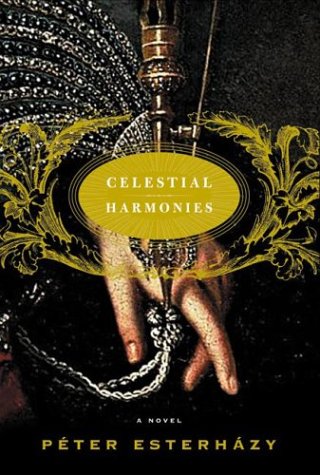
Celestial Harmonies
Oh man. This was a struggle for me. It literally felt like I was sitting with a stranger for months on end listening to his personal stories, but never once got any closer to knowing who he is as a person or anything substantial about his past even though that is literally all he talked about. I expected to come out of this experience at least gaining some history on Hungarian nobility, but even that was a bust. How could I have gotten so little from 841 pages!?
I don't even know what to say. There seem to be about 5 people on GoodReads who had a good time reading this book, but they (besides one guy who has his own reasons) offer no reasons why except for vague sentences that seem like they don't really know what they're talking about and just want to look like they appreciate a notable book.
What baffles me is that this is a modern work. It reads like it was written a hundred years ago, despite the "contemporary" style of writing.
Do I recommend this? Nope, definitely not for someone with my taste in literature. Do I regret the months I spent reading it with no joy to show for it? I guess all I can say to that is "Look at my willpower to finish this list". Peter Esterhazy, you're just another notch in my bookshelf.
I don't even know what to say. There seem to be about 5 people on GoodReads who had a good time reading this book, but they (besides one guy who has his own reasons) offer no reasons why except for vague sentences that seem like they don't really know what they're talking about and just want to look like they appreciate a notable book.
What baffles me is that this is a modern work. It reads like it was written a hundred years ago, despite the "contemporary" style of writing.
Do I recommend this? Nope, definitely not for someone with my taste in literature. Do I regret the months I spent reading it with no joy to show for it? I guess all I can say to that is "Look at my willpower to finish this list". Peter Esterhazy, you're just another notch in my bookshelf.
Thursday, May 14, 2015
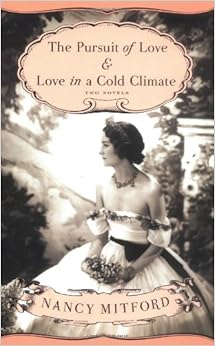
Nancy Mitford
The Pursuit of Love: Fast, merry, and delightful. The entire story reads like a friend gossiping to you, without becoming trite in any way. Though it took place during wartime, the tone consistently stayed bright throughout, and delivered plenty of humor to keep me engaged as I sped through every sentence. The contrast between the narrator and Linda was just right, too, I think, and I really do think that Mitford is a very engaging storyteller. This is very much a woman's novel, and I could imagine it to be the equivalent of chick lit today in its day, but it's in no way a guilty read. The way it ended! Hilarious! "The doctors who said that Linda ought never to have another child were not such idiots after all. It killed her." Bam. She died. So to the point out of nowhere when the whole story was about her. So randomly brilliant, I'm still recovering.
Love in a Cold Climate: If Linda is a whirlwind, Polly is a stone. Unlike the Alconleighs, who were so personable and warm, the Montdores are distant and chilly. With The Pursuit of Love, I felt drawn in and included, whereas with Love in a Cold Climate I felt distant and a bit melancholy. It felt, too, a bit older (matured), like our eyes were opened to the truth whereas in Linda's story we were all (quite obviously) blinded by youth and romance. Mitford's wit was still there, and there were spells of humor from the first story that would occasionally peek out, winking at you, but altogether, the two are very different stories curiously spanning the same periods. With Lady Matdores' superficiality, however, Cold Climate felt a little more mainstream to stories of aristocracy, and therefore slightly less original.
The biggest mystery to me though, is why everyone loves Davey so much, and seriously, how isn't he gay?
Love in a Cold Climate: If Linda is a whirlwind, Polly is a stone. Unlike the Alconleighs, who were so personable and warm, the Montdores are distant and chilly. With The Pursuit of Love, I felt drawn in and included, whereas with Love in a Cold Climate I felt distant and a bit melancholy. It felt, too, a bit older (matured), like our eyes were opened to the truth whereas in Linda's story we were all (quite obviously) blinded by youth and romance. Mitford's wit was still there, and there were spells of humor from the first story that would occasionally peek out, winking at you, but altogether, the two are very different stories curiously spanning the same periods. With Lady Matdores' superficiality, however, Cold Climate felt a little more mainstream to stories of aristocracy, and therefore slightly less original.
The biggest mystery to me though, is why everyone loves Davey so much, and seriously, how isn't he gay?
Saturday, May 2, 2015
Kafka on the Shore
Another Murakami. The most popular, as far as I'm concerned, but to me, the least satisfactory. The entire novel felt disconnected, like I was set on a treadmill at walking pace, without any goal in sight. At least in his previous novels there was some sort of goal to be worked after. As expected, the story quietly ended with no resolution or really any attempt at sense.
I'm not sure if this reaction is due to the fact that I've read so many of his books now and am tired of his style, or that Kafka really was a lackluster work. Sure, some of the characters were interesting and likable, but it was hard to care about anything happening at all. It feels more like I was introduced to them for a brief period, and now will forget them all without effort. And "The Boy Named Crow" was really just annoying, and made no sense to me. If you're going to personify the conscience, do it with purpose. I'd like to know what Murakami's intent in writing all of these stories are. Maybe he's like Miss Saeki in this story, writing for no one and no reason.
Per usual, the world of Murakami in Kafka was muted and quiet. Lack of feeling, but uneasy, like a surrealist painting. This feeling bleeds into real life when I read his writing, so now that it's spring, maybe I'm glad that I'm through with his books. At least for a while.
I'm not sure if this reaction is due to the fact that I've read so many of his books now and am tired of his style, or that Kafka really was a lackluster work. Sure, some of the characters were interesting and likable, but it was hard to care about anything happening at all. It feels more like I was introduced to them for a brief period, and now will forget them all without effort. And "The Boy Named Crow" was really just annoying, and made no sense to me. If you're going to personify the conscience, do it with purpose. I'd like to know what Murakami's intent in writing all of these stories are. Maybe he's like Miss Saeki in this story, writing for no one and no reason.
Per usual, the world of Murakami in Kafka was muted and quiet. Lack of feeling, but uneasy, like a surrealist painting. This feeling bleeds into real life when I read his writing, so now that it's spring, maybe I'm glad that I'm through with his books. At least for a while.
Sunday, April 12, 2015
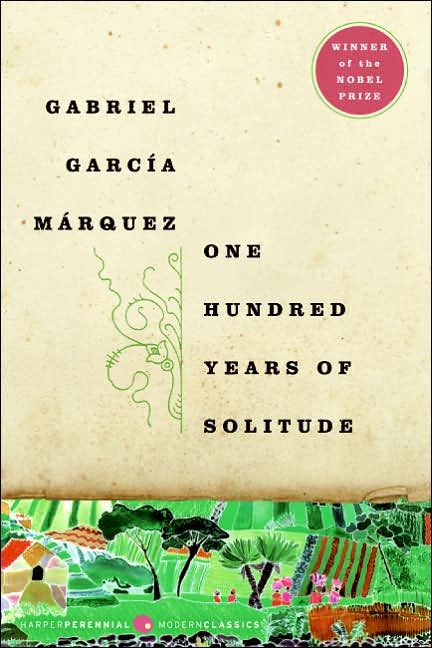
One Hundred Years of Solitude
Simultaneously light, heavy, magical, realistic, playful, melancholy, and impeccably thoughtful, One Hundred Years of Solitude by Gabriel Garcia Marquez is one that had me feeling things for a fictional family that is hard to believe is achievable. Somewhere between the story of however-many Buendia generations, I became part of the family...or maybe, one among many ghosts living in the house.
I am an absolute sucker for nostalgia and the way that Marquez treated this theme is remarkable. With the use of the same 4-5 set of names used over and over, he created an experience where one is not simply being told the story, but rather being forced to remember along with the rest of the characters. The events and emotions within the story become the reader's memories, and as the characters recall the past, so do you. I seriously grew nostalgic for deceased characters when they were mentioned at the end. I mean, come on.
There were, at times, moments where I became tired of the repetitious themes, as I'm sure is expected, but at the final turn of the page, I am left completely enchanted with every aspect of the little village of Macondo's (wherever it's supposed to be, because I'm still not sure) history and the people within it. I mean it; do not falter, just keep reading. It's the in kind of book that makes you want to live.
I am an absolute sucker for nostalgia and the way that Marquez treated this theme is remarkable. With the use of the same 4-5 set of names used over and over, he created an experience where one is not simply being told the story, but rather being forced to remember along with the rest of the characters. The events and emotions within the story become the reader's memories, and as the characters recall the past, so do you. I seriously grew nostalgic for deceased characters when they were mentioned at the end. I mean, come on.
There were, at times, moments where I became tired of the repetitious themes, as I'm sure is expected, but at the final turn of the page, I am left completely enchanted with every aspect of the little village of Macondo's (wherever it's supposed to be, because I'm still not sure) history and the people within it. I mean it; do not falter, just keep reading. It's the in kind of book that makes you want to live.
Subscribe to:
Posts (Atom)