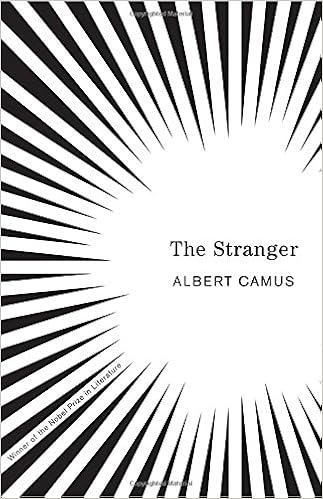
The Translator's Note in the version I was reading claimed that Camus modeled L'Etranger on "the American method" -- as Hemingway and Faulkner had written. Having read Hemingway just before this book, however, I'm happy to say that though monsieur may have pulled the writing style from Americans, his writing remains unequivocally French; with finesse and poetry. I don't care for the writing style of the "Lost Generation". Curt, unemotional, and utterly selfish. There is nothing to relate to or care for. Through Camus' writing though, the short sentence structure and guiltless character came together to create something totally beautiful.
Meursault shows nor feels much emotion when his mother passes away. He refuses to admit that he loves his girlfriend. He doesn't even show remorse for shooting and killing a man. But he still flipping has so much more emotion and complexity than Jake Barnes. Like a real person. I don't know if it's because I watched HBO's "The Night Of" just prior to starting this book, but I kept forgetting that Meursault was actually guilty. It was a skillful trick. When the protagonist realized that he was indeed guilty, so did I, just at the same time. When he hears his final fate, it is just as jarring as if it was announced upon myself -- a serious shock, like my stomach fell to the floor. I was that invested.
What else can I say? I'm giving this one to the French.
A writer's conversations & response to the 1001 Books You Must Read Before You Die list.
Monday, February 13, 2017
Wednesday, January 4, 2017
Tonight, what I trust to be this blog's only reader, whom I unfortunately only speak to a handful of times a year, asked me why I had not written in months. To this, unfazed, I replied that I was simply a no-good human being that was taking months to finish this minuscule book. About an hour after this conversation, my power went out for no explicable reason. It took me 2.5 hours for my phone battery to finally die out, leaving me to wearily pull out this borrowed copy of The Sun Also Rises, which, as mentioned, I have been working on for 2 whole months. And folks, I did it. I finally finished it. It took the literature gods' cutting off my power to force me into action after very nicely trying to push me that way with a very friendly voice, which I promptly ignored, but it happened.
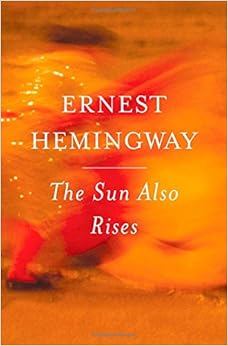
Anyway, back to Hemingway. Pre Sun, I was a Hemingway virgin. The only thing I knew about it was that hipsters love him. I trusted those hipsters. I trusted them because I, too, like Herschel and Kanken backpacks and gastropubs and irony. I believed something beautiful or thoughtful would be there waiting for me. But sadly, now I'm just confused. It's not that I hated it. I didn't. I just don't get why you'd want to sit there and spend so much time with 5 selfish jerks. Because this book literally was like you were tailing this terrible group of young people on their entitled vacation. I wish my biggest problem in life was complaining about being poor while using exorbitant amounts of money, being loved too much, and constantly feeling "tight" - while we're at it, someone please explain to me what that means.
There's still plenty of other books on the list by good old Ernest, so I'll still keep an open mind, but...just...why.
Anyway, back to Hemingway. Pre Sun, I was a Hemingway virgin. The only thing I knew about it was that hipsters love him. I trusted those hipsters. I trusted them because I, too, like Herschel and Kanken backpacks and gastropubs and irony. I believed something beautiful or thoughtful would be there waiting for me. But sadly, now I'm just confused. It's not that I hated it. I didn't. I just don't get why you'd want to sit there and spend so much time with 5 selfish jerks. Because this book literally was like you were tailing this terrible group of young people on their entitled vacation. I wish my biggest problem in life was complaining about being poor while using exorbitant amounts of money, being loved too much, and constantly feeling "tight" - while we're at it, someone please explain to me what that means.
There's still plenty of other books on the list by good old Ernest, so I'll still keep an open mind, but...just...why.
Sunday, November 6, 2016
Around the World in 80 Days
I started Jules Verne's Around the World in 80 Days while I traveled across America in 6. Much like Mr. Fogg, I had some close calls and unexpected issues, which unfortunately brought me home later than scheduled, unlike the heroin of our story.
It's a fun, quick, silly book. Descriptions are brief and to the point, much like Fogg himself, and it often reads just like a timetable rather than an actual story. The protagonist is a very likable character, much like Sherlock from the BBC show - cool, calculated, and logical (and though he says he has no friends, easily finds himself loved by those around him). It's strange to think that the entire book is carried through without much emotional connection to any of the characters, but somehow it's effective in driving home the point of a nail-biter adventure story.
I'm only confused as to why pop culture associates this story to a hot air balloon - none was present in the entire book, save for one mention of this form of transportation which was immediately dismissed.
It's a fun, quick, silly book. Descriptions are brief and to the point, much like Fogg himself, and it often reads just like a timetable rather than an actual story. The protagonist is a very likable character, much like Sherlock from the BBC show - cool, calculated, and logical (and though he says he has no friends, easily finds himself loved by those around him). It's strange to think that the entire book is carried through without much emotional connection to any of the characters, but somehow it's effective in driving home the point of a nail-biter adventure story.
I'm only confused as to why pop culture associates this story to a hot air balloon - none was present in the entire book, save for one mention of this form of transportation which was immediately dismissed.
Saturday, September 10, 2016
The Enormous Room
There was quite a lot of simple French dialogue in my e-book version, without any form of translation. With my highschool/early college knowledge of French, I was able to understand the majority of it without help, but wondered whether everyone was so educated in the language in the 20's. What do modern people do when they read this?
In other news, JONATHAN SAFRAN FOER HAS COME OUT WITH A NEW BOOK! That means the next book from the 1001 list is probably going to have to wait a little longer to get its turn from me.
Saturday, August 6, 2016
Mansfield Park
Mansfield Park by Jane Austen in summation...
The first 500 pages: Before there was Larry David, who got famous for writing stories about nothing, there was Jane Austen. It was like time was still, with nothing to report on for months on end. It really must have been nice to be the child of a wealthy European person in the 1800s. Their problems were trivial and emotions juvenile, and nearly everyone is unlikable.
The last chapter: Night and day from what I just described. Very odd; everything from the writing style, to perspective, to pace was entirely separate from the rest of the book. It almost seemed like someone had put a gun to Austen's head and told her to just sum it up or else. Austen speeds through months within a matter of pages (what would have taken her hundreds if not more pages previously), and skips through what one would have presumed to be the ultimate climax as if it were a trifle.
It seemed like the author was learning how to write throughout the entirety of the book, getting into the groove in the middle, but then realizing she had taken up all of her pages in the beginning and finally giving up and rushing through the ending. I really do not give much credit to Jane Austen. I don't understand why she is given so much praise; her female protagonists are often silly and mindless and it's very hard for me to connect with them. I can only imagine that her life reflected that of all of her characters', and that her own life must have been a very dull one indeed.
The first 500 pages: Before there was Larry David, who got famous for writing stories about nothing, there was Jane Austen. It was like time was still, with nothing to report on for months on end. It really must have been nice to be the child of a wealthy European person in the 1800s. Their problems were trivial and emotions juvenile, and nearly everyone is unlikable.
The last chapter: Night and day from what I just described. Very odd; everything from the writing style, to perspective, to pace was entirely separate from the rest of the book. It almost seemed like someone had put a gun to Austen's head and told her to just sum it up or else. Austen speeds through months within a matter of pages (what would have taken her hundreds if not more pages previously), and skips through what one would have presumed to be the ultimate climax as if it were a trifle.
It seemed like the author was learning how to write throughout the entirety of the book, getting into the groove in the middle, but then realizing she had taken up all of her pages in the beginning and finally giving up and rushing through the ending. I really do not give much credit to Jane Austen. I don't understand why she is given so much praise; her female protagonists are often silly and mindless and it's very hard for me to connect with them. I can only imagine that her life reflected that of all of her characters', and that her own life must have been a very dull one indeed.
Wednesday, June 1, 2016
A Room With a View
There's no getting around it. I have been a lazy piece of garbage. I hadn't read anything for almost a complete 3 months, not because I was busy, but simply because it seemed like too much effort.
But I've broken free now! And I read a very short book, very slowly. I don't have much to say about E.M. Forster's A Room With a View, except that it was an ideally brief story as befitting a lazy me. I preferred his A Passage to India - that one seemed to have more mystery and voice and elegance. Room was almost silly, though perhaps it's really just my disinterest in reading about people falling in love so plainly. I'm pretty jealous of the lifestyle all of these characters have in this time though - all travel to fantastic locations, and socializing, and lazy afternoons in the country. I wish.
Not dull, but also not much to dote on. That is my simple view of this book. (But after a google image search of the title, I see there was a movie made with Helena Bonham Carter as Lucy looking all pre-emo, and Maggie Smith as Charlotte, and it's screwing up my whole perception of what these characters could be. Oh the difference a film can make)
But I've broken free now! And I read a very short book, very slowly. I don't have much to say about E.M. Forster's A Room With a View, except that it was an ideally brief story as befitting a lazy me. I preferred his A Passage to India - that one seemed to have more mystery and voice and elegance. Room was almost silly, though perhaps it's really just my disinterest in reading about people falling in love so plainly. I'm pretty jealous of the lifestyle all of these characters have in this time though - all travel to fantastic locations, and socializing, and lazy afternoons in the country. I wish.
Not dull, but also not much to dote on. That is my simple view of this book. (But after a google image search of the title, I see there was a movie made with Helena Bonham Carter as Lucy looking all pre-emo, and Maggie Smith as Charlotte, and it's screwing up my whole perception of what these characters could be. Oh the difference a film can make)
Friday, March 4, 2016
Dead Babies
Well shit.
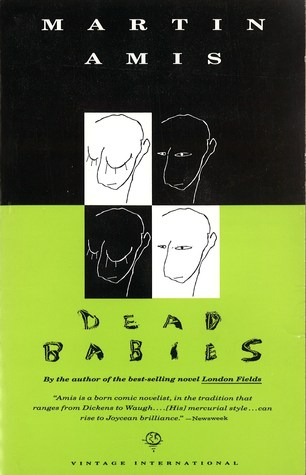
Dead Babies by Martin Amis is one hell of a book. Everyone on GoodReads seems to be super disturbed by it, but I don't share that sentiment. To me, it was cool (in the slick way, not the can't-think-of-a-way-to-say-I-like-something-way), funny, and actually elegantly engaging. I don't know why all the readers on the aforementioned site keep calling Amis shallow, because this book, so closely resembling dark genres of cult legend like Clockwork Orange, in my opinion, is much easier to digest than that (not to mention far superior to any garbage like Paluhniuk that everyone jizzes over so much). It isn't gruesome in an unnecessary way, and though it obviously isn't a popular opinion, I honestly think the characters are likable in their individual crazy ways. There is a point to everything that happens, and I really appreciate that having read so many books on this list that seem to have endless pages of useless dribble.
Sure, the subject is crass, dirty, and edgy. But that's what gives it so much character. There's pure joy in getting to spend a few days with these drug addicted assholes. Fuck and get fucked up until the very climactic end. It's all in good fun, folks.
Dead Babies by Martin Amis is one hell of a book. Everyone on GoodReads seems to be super disturbed by it, but I don't share that sentiment. To me, it was cool (in the slick way, not the can't-think-of-a-way-to-say-I-like-something-way), funny, and actually elegantly engaging. I don't know why all the readers on the aforementioned site keep calling Amis shallow, because this book, so closely resembling dark genres of cult legend like Clockwork Orange, in my opinion, is much easier to digest than that (not to mention far superior to any garbage like Paluhniuk that everyone jizzes over so much). It isn't gruesome in an unnecessary way, and though it obviously isn't a popular opinion, I honestly think the characters are likable in their individual crazy ways. There is a point to everything that happens, and I really appreciate that having read so many books on this list that seem to have endless pages of useless dribble.
Sure, the subject is crass, dirty, and edgy. But that's what gives it so much character. There's pure joy in getting to spend a few days with these drug addicted assholes. Fuck and get fucked up until the very climactic end. It's all in good fun, folks.
Subscribe to:
Posts (Atom)