This is an incredibly delayed post. I finished the first of my last two List books over 2 months ago, and sat on writing about it while a slew of laziness ensued. My computer also died, and I waited to replace it for no reason other than stubbornness for at least a month, at which point I had already started my second Atwood book, which spurred me to wait to report on the first one until that finished. In all honesty I could even have finished the second book weeks ago, but the thought of writing about it haunted me and I dragged finishing off the last 30 or so pages on for weeks. It's a wonder I'm even alive and not 600 pounds, based on how unmotivated I am in all aspects of life.
Anyway.
Having pasted the book cover image in here, I just now realized she's behind bars. I'm so slow. Wow.
So Alias Grace in my opinion, was not as good as A Handmaid's Tale (which is obviously why it's not nearly as famous), but entertaining enough. I'm less attracted to this speculative/fictionalized version of a historical incident that has so many questions attached to it - virtually everything about the murder at the center of the story is in question and shrouded in mystery - than a concrete one such as In Cold Blood, which if you look back, I quite enjoyed. I did, however, find this excerpt from the beginning of chapter 18 particularly funny. Mansplaining through the ages, if you will (and so throughly Atwood):
"Today Dr. Jordan looks more disarranged than usual, and as if he has something on his mind; he does not seem to know quite how to begin. So I continue with my sewing until he's had time to gather himself together, and then he says, Is that a new quilt you're working on, Grace?
And I say, Yes it is, Sir, it is a Pandora's Box for Miss Lydia.
This puts him in an instructive mood, and I can see he is going to teach me something, which gentlemen are fond of doing."
Bahaha.
As for Cat's Eye, it was quite a change of pace compared to the others. I kept forgetting that it took place in Canada and got confused every time they spoke about America as if it were another country. I guess that shows the similarity between the two. I like it though, because I can relate to it, I think. A lot of Elaine's childhood memories really hit home for me and made me self-aware and uncomfortable while I was reading them. I recognize girls I knew in her friends, and my own insecurities in her's. Her adult life as an artist felt familiar to my college days as well; the way it is created (as something literal and personal), then perceived (as something else), and the community surrounding it. I don't personally have a Cordelia, but I suppose everyone has someone or something haunting them, no matter who they are, and that's what Cordelia is. It's quite a beautifully relatable book.
Less importantly, but still distractingly, the copy I read (Anchor Books) had a lot of typos. You know how much that throws me off, so points off there. Strange, because the others didn't have this problem at all.
A writer's conversations & response to the 1001 Books You Must Read Before You Die list.
Friday, September 1, 2017
Monday, May 22, 2017
Far From the Madding Crowd
I know, I said I was going to read more Atwood but obtaining real books is harder than it used to be. So I got distracted by this free book from the Amazon bookstore (and a 2000 piece puzzle, while we're at it) while I was trying to track down what I really wanted to read. I did make it out to Barnes & Noble eventually though so I will be returning to the scheduled materials as soon as I finish typing this post.
Anyway. Why does everyone say Bathsheba Everdeen is the original feminist? What is strong about her? Just because she owned a farm? Inheriting something of value and then having a bunch of men maintain it for you because they want to kiss you doesn't make you a strong woman. I feel like Anna Karenina is a much better female symbol than Bathsheba is. She's even a bit spineless which makes her downright mean in the end (both to her lovers and to her apparent best friend). Despite that, I don't dislike the heroine. I suppose she's realistic. She's a bit bratty and childish despite what everyone around her thinks, but I guess considering that she's 23-24 and has always lived a charmed life, that's as much as I could expect. I guess it just means I should be thankful that society doesn't die off as easily and that the world (at least the one in which I live) isn't run by such young people anymore.
What did seem modern to me though, was the treatment of mental illness on Boldwood's part. I don't think I've read anything from this time that would be so outright calling it that. But who knows, maybe I don't know what I'm talking about, either.
Anyway, I guess in summation, this book is everything you would expect from its genre. Romance, tragedy, gossip, a beautiful heroine, the countryside. If you're into that, have at it.
Anyway. Why does everyone say Bathsheba Everdeen is the original feminist? What is strong about her? Just because she owned a farm? Inheriting something of value and then having a bunch of men maintain it for you because they want to kiss you doesn't make you a strong woman. I feel like Anna Karenina is a much better female symbol than Bathsheba is. She's even a bit spineless which makes her downright mean in the end (both to her lovers and to her apparent best friend). Despite that, I don't dislike the heroine. I suppose she's realistic. She's a bit bratty and childish despite what everyone around her thinks, but I guess considering that she's 23-24 and has always lived a charmed life, that's as much as I could expect. I guess it just means I should be thankful that society doesn't die off as easily and that the world (at least the one in which I live) isn't run by such young people anymore.
What did seem modern to me though, was the treatment of mental illness on Boldwood's part. I don't think I've read anything from this time that would be so outright calling it that. But who knows, maybe I don't know what I'm talking about, either.
Anyway, I guess in summation, this book is everything you would expect from its genre. Romance, tragedy, gossip, a beautiful heroine, the countryside. If you're into that, have at it.
Wednesday, April 5, 2017
The Handmaid's Tale
Alright, I admit it, I read Margaret Atwood's The Handmaid's Tale at this point because there is a Hulu version coming out soon. I don't have a Hulu account, but we'll worry about that later.
I know Atwood is a contemporary writer, but for some reason, I always expect her to be outdated. I remember reading The Blind Assassin back in high school and being surprised at how modern it felt, even though it was written in 2000. It's probably the artwork on the covers that make me feel that way. Is she doing it on purpose, do you think? Anyway, I liked that book back then, though regrettably I don't remember anything about it now.
The dystopian society of The Handmaid's Tale hits hard when considering today's world, but maybe that's just how it always feels in the world concerning women's rights. It feels important, though, that it's surfacing in popular media now. Power, gender, race, just generally what humanity does to itself. It's a lot to take in. And we're all fucked and so is history. Let me just point out though that the Japanese people were totally normal in this alternate universe.
The ending is really interesting and jarring, though I feel like I've ruined the surprise for myself now if I do end up watching the show. It made me think a lot about how history and time works irl, and it felt very strange to suddenly take such a distant speculative step back after being so close to the narrative for so long before that. Really though, I couldn't have chosen a better line to end with. "Any questions?". Yes. I have so many. And I love it.
There are a number of Atwood books on this list, and I think I'll indulge. See what this whole feminism thing is about. Talk soon.
I know Atwood is a contemporary writer, but for some reason, I always expect her to be outdated. I remember reading The Blind Assassin back in high school and being surprised at how modern it felt, even though it was written in 2000. It's probably the artwork on the covers that make me feel that way. Is she doing it on purpose, do you think? Anyway, I liked that book back then, though regrettably I don't remember anything about it now.
The dystopian society of The Handmaid's Tale hits hard when considering today's world, but maybe that's just how it always feels in the world concerning women's rights. It feels important, though, that it's surfacing in popular media now. Power, gender, race, just generally what humanity does to itself. It's a lot to take in. And we're all fucked and so is history. Let me just point out though that the Japanese people were totally normal in this alternate universe.
The ending is really interesting and jarring, though I feel like I've ruined the surprise for myself now if I do end up watching the show. It made me think a lot about how history and time works irl, and it felt very strange to suddenly take such a distant speculative step back after being so close to the narrative for so long before that. Really though, I couldn't have chosen a better line to end with. "Any questions?". Yes. I have so many. And I love it.
There are a number of Atwood books on this list, and I think I'll indulge. See what this whole feminism thing is about. Talk soon.
Monday, February 13, 2017
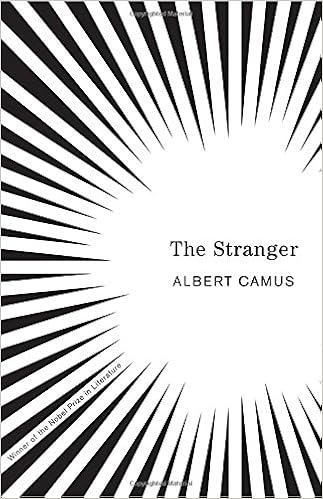
The Stranger/The Outsider
The Translator's Note in the version I was reading claimed that Camus modeled L'Etranger on "the American method" -- as Hemingway and Faulkner had written. Having read Hemingway just before this book, however, I'm happy to say that though monsieur may have pulled the writing style from Americans, his writing remains unequivocally French; with finesse and poetry. I don't care for the writing style of the "Lost Generation". Curt, unemotional, and utterly selfish. There is nothing to relate to or care for. Through Camus' writing though, the short sentence structure and guiltless character came together to create something totally beautiful.
Meursault shows nor feels much emotion when his mother passes away. He refuses to admit that he loves his girlfriend. He doesn't even show remorse for shooting and killing a man. But he still flipping has so much more emotion and complexity than Jake Barnes. Like a real person. I don't know if it's because I watched HBO's "The Night Of" just prior to starting this book, but I kept forgetting that Meursault was actually guilty. It was a skillful trick. When the protagonist realized that he was indeed guilty, so did I, just at the same time. When he hears his final fate, it is just as jarring as if it was announced upon myself -- a serious shock, like my stomach fell to the floor. I was that invested.
What else can I say? I'm giving this one to the French.
Meursault shows nor feels much emotion when his mother passes away. He refuses to admit that he loves his girlfriend. He doesn't even show remorse for shooting and killing a man. But he still flipping has so much more emotion and complexity than Jake Barnes. Like a real person. I don't know if it's because I watched HBO's "The Night Of" just prior to starting this book, but I kept forgetting that Meursault was actually guilty. It was a skillful trick. When the protagonist realized that he was indeed guilty, so did I, just at the same time. When he hears his final fate, it is just as jarring as if it was announced upon myself -- a serious shock, like my stomach fell to the floor. I was that invested.
What else can I say? I'm giving this one to the French.
Wednesday, January 4, 2017
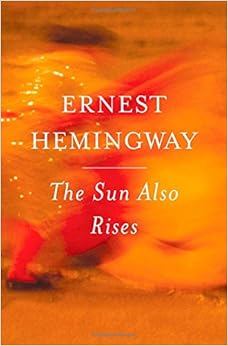
Tonight, what I trust to be this blog's only reader, whom I unfortunately only speak to a handful of times a year, asked me why I had not written in months. To this, unfazed, I replied that I was simply a no-good human being that was taking months to finish this minuscule book. About an hour after this conversation, my power went out for no explicable reason. It took me 2.5 hours for my phone battery to finally die out, leaving me to wearily pull out this borrowed copy of The Sun Also Rises, which, as mentioned, I have been working on for 2 whole months. And folks, I did it. I finally finished it. It took the literature gods' cutting off my power to force me into action after very nicely trying to push me that way with a very friendly voice, which I promptly ignored, but it happened.
Anyway, back to Hemingway. Pre Sun, I was a Hemingway virgin. The only thing I knew about it was that hipsters love him. I trusted those hipsters. I trusted them because I, too, like Herschel and Kanken backpacks and gastropubs and irony. I believed something beautiful or thoughtful would be there waiting for me. But sadly, now I'm just confused. It's not that I hated it. I didn't. I just don't get why you'd want to sit there and spend so much time with 5 selfish jerks. Because this book literally was like you were tailing this terrible group of young people on their entitled vacation. I wish my biggest problem in life was complaining about being poor while using exorbitant amounts of money, being loved too much, and constantly feeling "tight" - while we're at it, someone please explain to me what that means.
There's still plenty of other books on the list by good old Ernest, so I'll still keep an open mind, but...just...why.
Anyway, back to Hemingway. Pre Sun, I was a Hemingway virgin. The only thing I knew about it was that hipsters love him. I trusted those hipsters. I trusted them because I, too, like Herschel and Kanken backpacks and gastropubs and irony. I believed something beautiful or thoughtful would be there waiting for me. But sadly, now I'm just confused. It's not that I hated it. I didn't. I just don't get why you'd want to sit there and spend so much time with 5 selfish jerks. Because this book literally was like you were tailing this terrible group of young people on their entitled vacation. I wish my biggest problem in life was complaining about being poor while using exorbitant amounts of money, being loved too much, and constantly feeling "tight" - while we're at it, someone please explain to me what that means.
There's still plenty of other books on the list by good old Ernest, so I'll still keep an open mind, but...just...why.
Sunday, November 6, 2016
Around the World in 80 Days
I started Jules Verne's Around the World in 80 Days while I traveled across America in 6. Much like Mr. Fogg, I had some close calls and unexpected issues, which unfortunately brought me home later than scheduled, unlike the heroin of our story.
It's a fun, quick, silly book. Descriptions are brief and to the point, much like Fogg himself, and it often reads just like a timetable rather than an actual story. The protagonist is a very likable character, much like Sherlock from the BBC show - cool, calculated, and logical (and though he says he has no friends, easily finds himself loved by those around him). It's strange to think that the entire book is carried through without much emotional connection to any of the characters, but somehow it's effective in driving home the point of a nail-biter adventure story.
I'm only confused as to why pop culture associates this story to a hot air balloon - none was present in the entire book, save for one mention of this form of transportation which was immediately dismissed.
It's a fun, quick, silly book. Descriptions are brief and to the point, much like Fogg himself, and it often reads just like a timetable rather than an actual story. The protagonist is a very likable character, much like Sherlock from the BBC show - cool, calculated, and logical (and though he says he has no friends, easily finds himself loved by those around him). It's strange to think that the entire book is carried through without much emotional connection to any of the characters, but somehow it's effective in driving home the point of a nail-biter adventure story.
I'm only confused as to why pop culture associates this story to a hot air balloon - none was present in the entire book, save for one mention of this form of transportation which was immediately dismissed.
Saturday, September 10, 2016
The Enormous Room
There was quite a lot of simple French dialogue in my e-book version, without any form of translation. With my highschool/early college knowledge of French, I was able to understand the majority of it without help, but wondered whether everyone was so educated in the language in the 20's. What do modern people do when they read this?
In other news, JONATHAN SAFRAN FOER HAS COME OUT WITH A NEW BOOK! That means the next book from the 1001 list is probably going to have to wait a little longer to get its turn from me.
Subscribe to:
Posts (Atom)