Thursday, March 1, 2018

The Black Dahlia

I didn't expect James Ellroy's The Black Dahlia to be so fiction. It kind of put a damper on my experience. I guess I just compare all true crime novels to In Cold Blood now, and nothing ever lives up.

The writing felt like a cheap thrill, which I guess goes along with the tone of the storyline, but if this book did indeed launch Ellroy's career in the direction of serious writer like I've seen written in multiple places, then I don't really know why. I suppose Ellroy is able to dream up a complex crime plot from nothing, but that's not enough for me to consider him an artist worthy of accolade.  I also found it hard to remember all the names that kept getting thrown at me (not that that says much, because I'm the worst with names in books).

Ultimately, I don't like that the entire thing (characters, motives, conclusion) was entirely fake. I wanted the main character to be a real cop who had worked on the case, and for all of the other characters to have actually existed (I googled their names and it seems like none of them were real). I wanted to hear about more real evidence that was found at the time. I didn't want a fantasy ending that wraps up the case when in actuality it's been a mystery for over 70 years.  With the entire plot line revolving around bringing justice to The Black Dahlia, doing so kind of feels like it's doing the opposite for the real Elizabeth Short.

Anyway, my next book is a Michael Cunningham, and I'm SO EXCITED. Fangirllllll.

Sunday, February 18, 2018

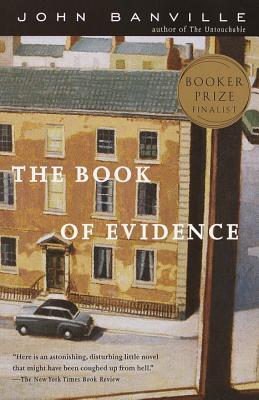
198. The Book of Evidence

I've been in a crime binge the past few weeks listening to cold case podcasts, and ordering books with dark storylines off of Amazon. The first was John Banville's The Book of Evidence.

At first the stream-of-thought format put me off, but it ended up being quite lovely in a quiet sort of way. I found myself wondering how an author even decides that a story like this one is even worth writing into a novel because it felt so light in premise, but it's curious in the end because the topic of murder in reality, really should be a heavy one.

Sometimes you're creeped out by the main character Freddie, sometimes you sympathize with him, and sometimes you're simply annoyed by him, and I guess that's the marks of creating a realistic character. Freddie is the everyman and murder seems like a reasonably casual accident that could happen to someone like this dude. Why does anyone do anything, anyway? At least he owns up to his wrongs, and that's something that everyone should aspire to.

Thursday, January 4, 2018

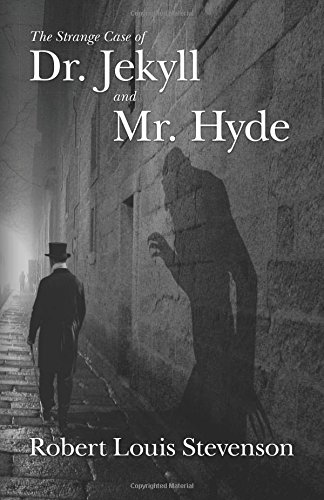
The Strange Case of Dr. Jekyll and Mr. Hyde

It's the second straight week of work where I've had literally nothing to do, so today, I spent my time reading The Strange Case of Dr. Jekyll and Mr. Hyde by Robert Louis Stevenson. I thought that the fact that I know the general gist of the story might ruin the effect, but it didn't have much of an impact, actually.

It was a quick read that flowed smoothly. I liked that the majority of the story was told by an outsider (in the way that many stories of this time are) so that I could follow along solving the mystery along with him. The moody, dark imagery was effective, and kept me engaged and in the atmosphere of the story. Jekyll's character is a bit flimsy without much attention given to backstory or motive, but if you chock it all up to good/evil-based emotions, I guess you can get away with it.

I guess that's really all I have to say about this one. I hope January goes quickly, on account of a few situations I am currently in that I am anxious to have end. If I had a Miss. Hyde, she would surely be punching everyone in the stomach and hurting everyone's feelings right now. Rabble rabble.

Wednesday, January 3, 2018

The Thousand and One Nights

I spent the last two days reading The Thousand and One Nights and I am not ashamed to say, I did not finish it. I got far - I was 3 more life-sucking stories away from the end of Volume 1, but couldn't bring myself to go through any more. I let myself quit because I am more than 100% sure that nothing more would have come out of it at the end, and that I had wasted enough time. Nonetheless, I'm marking this off my list because by god, it was a struggle.

This collection of stories is a torture. It's one rambling labyrinth of male praising, murderous, idiotic hell. For one thing, there is no possible way that there could be so many "most beautiful" women who look like a moon or whatever nonsense in one place and moreover, so easily found. Also, with all the cutting off of heads and "cutting in twain", it's a miracle that anyone is left alive in this terrible land. What is even the point of these stories if not for entertainment? There isn't any parable or lesson to be learned at the end of them, and is basically just encouraging people to be horrible forever in a relentless cycle like this collection itself.

I guess it's inventive to put a million stories into the skin of one, but really, all of the stories are identical and are simply not fun to read. Whoever the sultan or king or whatever is that Shaharazad is telling this to must not have a very high bar for entertainment. And for the love of anything, PLEASE cut your word count. Praise be, it's over and I never have to do it again.

--

As for a story that I did enjoy, Philip Pullman recently came out with a new book and I recently finished it. I'm a huge fan of His Dark Materials, and the first of his new trilogy, La Belle Sauvage was a thrilling delight, as I would expect of him. Sure, there were a few cliche moments that dragged it down from its preedecessors, but I beg of you, save yourself. Read that instead.

Tuesday, December 19, 2017

The Invisible Man

I liked The Time Machine so much that I read another H.G. Wells with high hopes. Unfortunately, my expectations weren't met, and I was disappointed overall. Time Machine was thrilling and fast paced, while this one was irritating and unsatisfying. 

It felt like Wells was trying to pose some questions about morals, humanity, and/or maybe even scientific advancement but I'm not quite sure I grasped which it was specifically. The character that the story revolves around is extremely difficult to sympathize as he throws fits for no apparent reason regardless of his situation and seemingly has no redeemable qualities unless you count his genius. With a lack of real plot, I felt this read dragged on a bit too long, and knowing that it started out as a serial story, it's hard to imagine that it had any devoted followers waiting for the next installment. I did however see a close similarity to the storytelling style that was executed so well in Time Machine  that wasn't as effective here, solely based on the plot and likability of the Griffin.

Monday, November 20, 2017

The Time Machine


I really like this one. It makes you think.

H.G. Wells starts The Time Machine with a lot of fancy language that intimidated me at first, but quickly became a gripping adventure tale that I didn't want to put down or have end. Wells really immerses you into the action, even while--very artfully--breaking the point of view between two narrators. I really don't remember the last time I was as engaged as I was for this (as far as this list is concerned). Even the heartbreakingly lonely death of the Earth is so beautiful in a matter of pages. I want more! I'm actually surprised it didn't turn into a series like Sherlock Holmes, though I'm also glad that it didn't, because it makes it that much better.

It's part social commentary, part allegory, all sci fi fun. I'd very much like to see it as a movie, but I doubt anything would be able to do Wells' impeccable imagery justice. Especially since I just looked up pics from the 1960 version and Weena looks like a normal gorgeous lady. What the literal crap. That is absolutely not the point of this story.

Thursday, November 16, 2017

Little Women

When I was little, my relatives from Japan used to send me VHS tapes of kids' shows to watch that they recorded from Japanese TV. One of the shows that I remember watching over and over again was this anime series called "ナンとジョー先生 (Nan and Teacher Jo)".  I realized sometime later that Miss Jo was a character that originated from Little Men (which I see now is a continuation of Little Women), so getting to read this book has a nostalgic place in my heart.

It's clear Jo is supposed to be the favorite in this book (I wonder if she's modeled after Louisa May Alcott herself), but is Amy actually supposed to be the worst? Because she really bothers me (even when she was the spoiled young 5 year old or whatever she was) and I can't get over it. In my eyes, she ruins Laurie. I mean, I'm glad Jo found the guy she's supposed to be with and that she's happy, but it basically did turn Laurie into a worthless piece of garbage. He sounds like an intelligent person when he speaks to Jo, but as soon as he has anything to do with Amy he gets pulled into her imbecility and it's hard to endure.  Call it what you will but it gave me some twisted pleasure that Amy and Laurie's child is weak and might die.

Also, for how much it was stressed that Meg's children were incredibly smart and "advanced", why the hell do they sound so stupid when they talk?

Anyway, if I can get past all that (which I barely can), this is a very warm, genuine story about family love as a joyful and cherished happy place. I prefer the first part to the second with all the ups and downs of teenager/mid 20's that had me longing with fondness on the past, but I suppose that's true to real life and shows Miss Alcott's talents.