Saturday, June 30, 2018

David Copperfield


Having moved to another state, I haven't had internet since the beginning of June. I wrote this probably about a month ago and it's just been sitting in an open word doc waiting for when US Internet decided to finally get wired into my apartment building, but IT STILL HASN'T HAPPENED. I finally caved and just bought the public wifi that the city of Minneapolis just randomly has streaming in my neighborhood, but at this point I don't remember anything too much more detailed because I've since finished the new Ondaatje book Warlight, and am also now over halfway through Emma. Time flies, I tell you. Anyway, on to David Copperfield.
With Ciderhouse Rules fresh on my mind, David Copperfield came next before I even knew it. Because of the former, I knew this was a story about an orphan, but I didn’t expect it to contain so many of them. David, Emily, Traddles, Ham…
Surprisingly for an orphan tale, too, David’s story is a remarkably happy one. In the beginning (and honestly, probably even up to halfway through the book), I kept expecting the most unfortunate things to happen to the main character whenever such an opportunity presented itself, but he always had luck on his side and somehow came away unmarked. Even with having the misfortune of a stupid and naïve mother and a “cruel” step father and aunt in his youth, I still found it kind enough of them to pay for D.C’s lodgings and schooling, which is a lot more than many other literary characters found themselves having.
In as lengthy a format as this novel was, I find it hard to imagine it capturing the attention of the orphans in The Ciderhouse Rules. How long would it have taken Homer to finish a round of it? Would a child really be able to follow the narrative?
Regardless, I found it charming. And as Charles Dickens’ self-proclaimed favorite, I can get a sense of the author’s cheery fondness for D.C. guiding him through every adventure, much like the cast of Copperfield’s supporters, who I found to love just as much as if they were my own angels (Traddles had me from the moment he drew his first skeleton). Maybe Dickens even put a bit of himself in each of them. I hope so, anyway.

Friday, April 27, 2018

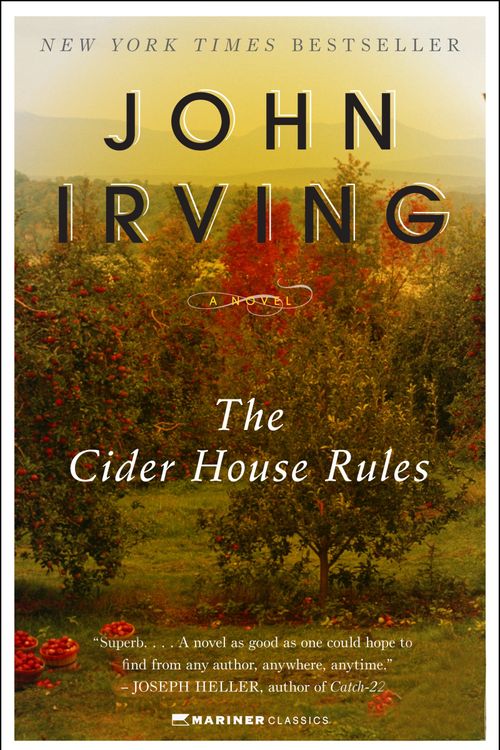
The Cider House Rules

I am sure that this movie was presented to me sometime in my youth, if not only for the certainty that when the state of Michigan started airing tourism commercials, I immediately recognized the graceful, sweeping piano and string melody that I associated to the words "Cider House Rules". I don't know why, but that song must have had a strong effect on me.

It's hard to imagine where I would have seen it - because I feel like it was in school - due to the strong sexual nature of literally every sentence presented in this book, and because I vaguely recall a sense of discomfort certain scenes could have given me but it is all presented with such taste and gentle understanding of human nature and the world itself that I suppose it couldn't ever have been obscene (I'm sure Hollywood would have toned it all down, anyway).

There is so much love packed into this book that it's hard not to be affected. Irving writes with such sensitivity of the human experience. Yes, we are flawed and life is riddled with disappointments, but above all, there is the tragedy and tenderness of love. Homer's decisions were often frustrating to me, in likely the same way I would have reacted had I actually known him and been able to interact with him. He is so surrounded by love, but he fails to see it in so many ways. I found myself to personally have Dr. Larch's interest at heart, and though it was so easy to be annoyed by Melony's dogged pursuit of Homer, their inability to tear themselves away from this person (which I'm sure could reflect any man out there) struck as something that was undoubtedly pure and real.

It's also an incredibly literary book - in its self awareness, and its attachment to other greats. I would like to read David Copperfield one day, if nothing more than to hear some of those lovely passages again as if to rake up sort of distant memory.  The short "catch phrases" of Irving's own creation are powerfully effective as well, and I found them so incredibly moving. Let us be happy for the Princes of Maine -- the Kings of New England. They will always have a family.

Wednesday, April 4, 2018

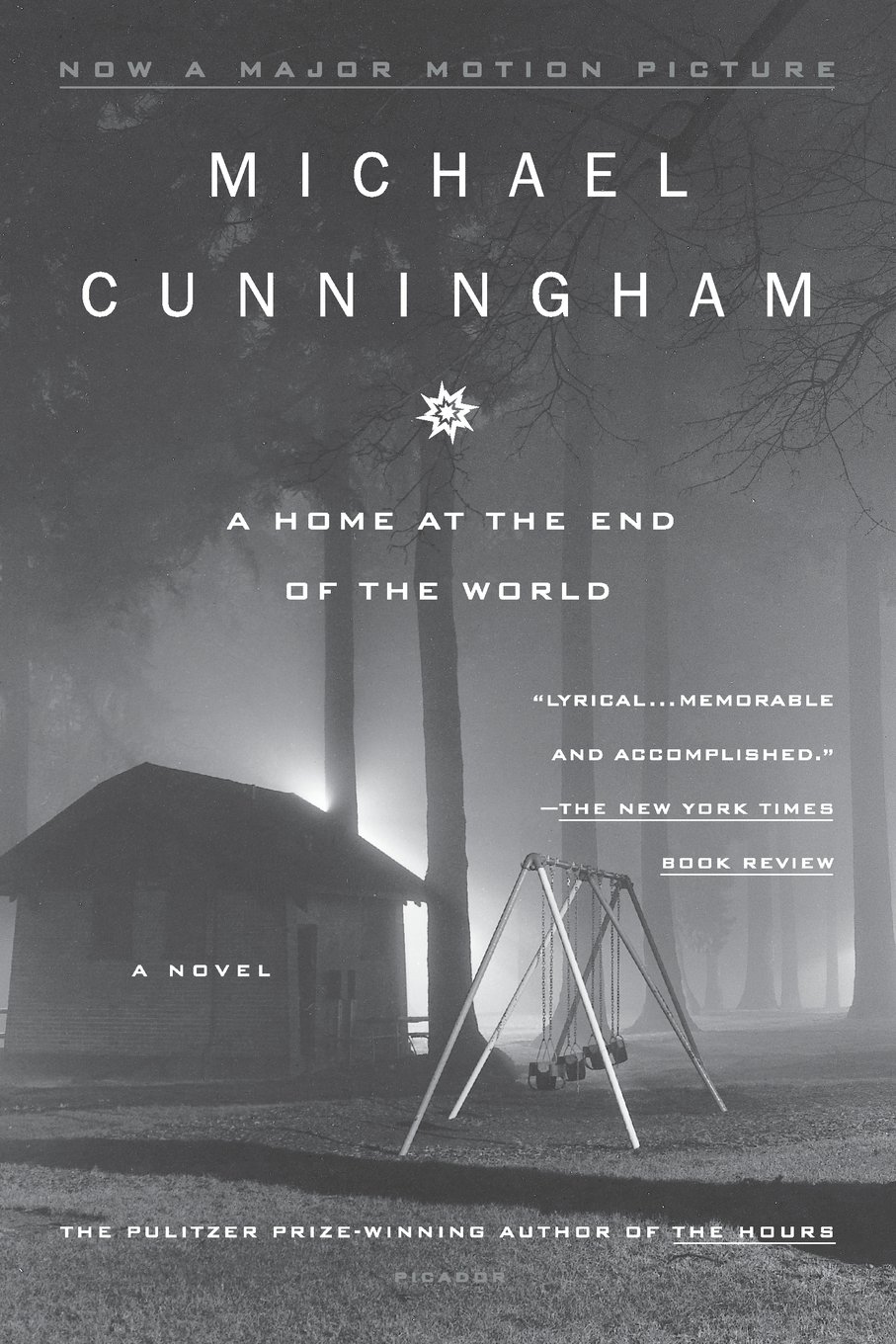
A Home at the End of the World

I imagine Michael Cunningham to have a very beautiful, gentle view of the world, because that's what comes through in his writing. A Home at the End of the World is so hauntingly lonely and fragile, truthfully illustrating what it's like to grow up. Nothing turns out as you expect but you manage and come to terms with it. Who among us has even a notion of what they're doing? There is a bit of Clare, Jonathan, Bobby, and Alice in us all.

It's the beauty of the tiniest moments which hang in your memory that really defines our lives. I think of this often, and I'm so charmed that Cunningham wrote about it:

"I wouldn't say I was happy. I was nothing so simple as happy. I was merely present, perhaps for the first time in my adult life. The moment was unextraordinary. But I had the moment, I had it completely...I would not die unfulfilled because I had been here, right here and nowhere else."

It was a gorgeous scene to end the book, but I was slightly disappointed that the final chapter wasn't written through Rebecca's eyes. I find arguments pro and against this tactic so regardless, I'm completely under Cunningham's spell. I still prefer The Hours, but this one stands on its own is in a different sort of way. 

Thursday, March 1, 2018

The Black Dahlia

I didn't expect James Ellroy's The Black Dahlia to be so fiction. It kind of put a damper on my experience. I guess I just compare all true crime novels to In Cold Blood now, and nothing ever lives up.

The writing felt like a cheap thrill, which I guess goes along with the tone of the storyline, but if this book did indeed launch Ellroy's career in the direction of serious writer like I've seen written in multiple places, then I don't really know why. I suppose Ellroy is able to dream up a complex crime plot from nothing, but that's not enough for me to consider him an artist worthy of accolade.  I also found it hard to remember all the names that kept getting thrown at me (not that that says much, because I'm the worst with names in books).

Ultimately, I don't like that the entire thing (characters, motives, conclusion) was entirely fake. I wanted the main character to be a real cop who had worked on the case, and for all of the other characters to have actually existed (I googled their names and it seems like none of them were real). I wanted to hear about more real evidence that was found at the time. I didn't want a fantasy ending that wraps up the case when in actuality it's been a mystery for over 70 years.  With the entire plot line revolving around bringing justice to The Black Dahlia, doing so kind of feels like it's doing the opposite for the real Elizabeth Short.

Anyway, my next book is a Michael Cunningham, and I'm SO EXCITED. Fangirllllll.

Sunday, February 18, 2018

198. The Book of Evidence

I've been in a crime binge the past few weeks listening to cold case podcasts, and ordering books with dark storylines off of Amazon. The first was John Banville's The Book of Evidence.

At first the stream-of-thought format put me off, but it ended up being quite lovely in a quiet sort of way. I found myself wondering how an author even decides that a story like this one is even worth writing into a novel because it felt so light in premise, but it's curious in the end because the topic of murder in reality, really should be a heavy one.

Sometimes you're creeped out by the main character Freddie, sometimes you sympathize with him, and sometimes you're simply annoyed by him, and I guess that's the marks of creating a realistic character. Freddie is the everyman and murder seems like a reasonably casual accident that could happen to someone like this dude. Why does anyone do anything, anyway? At least he owns up to his wrongs, and that's something that everyone should aspire to.

Thursday, January 4, 2018

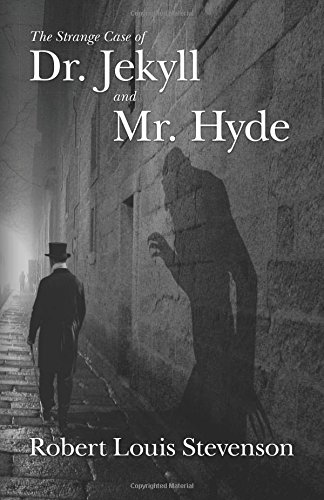
The Strange Case of Dr. Jekyll and Mr. Hyde

It's the second straight week of work where I've had literally nothing to do, so today, I spent my time reading The Strange Case of Dr. Jekyll and Mr. Hyde by Robert Louis Stevenson. I thought that the fact that I know the general gist of the story might ruin the effect, but it didn't have much of an impact, actually.

It was a quick read that flowed smoothly. I liked that the majority of the story was told by an outsider (in the way that many stories of this time are) so that I could follow along solving the mystery along with him. The moody, dark imagery was effective, and kept me engaged and in the atmosphere of the story. Jekyll's character is a bit flimsy without much attention given to backstory or motive, but if you chock it all up to good/evil-based emotions, I guess you can get away with it.

I guess that's really all I have to say about this one. I hope January goes quickly, on account of a few situations I am currently in that I am anxious to have end. If I had a Miss. Hyde, she would surely be punching everyone in the stomach and hurting everyone's feelings right now. Rabble rabble.

Wednesday, January 3, 2018

The Thousand and One Nights

I spent the last two days reading The Thousand and One Nights and I am not ashamed to say, I did not finish it. I got far - I was 3 more life-sucking stories away from the end of Volume 1, but couldn't bring myself to go through any more. I let myself quit because I am more than 100% sure that nothing more would have come out of it at the end, and that I had wasted enough time. Nonetheless, I'm marking this off my list because by god, it was a struggle.

This collection of stories is a torture. It's one rambling labyrinth of male praising, murderous, idiotic hell. For one thing, there is no possible way that there could be so many "most beautiful" women who look like a moon or whatever nonsense in one place and moreover, so easily found. Also, with all the cutting off of heads and "cutting in twain", it's a miracle that anyone is left alive in this terrible land. What is even the point of these stories if not for entertainment? There isn't any parable or lesson to be learned at the end of them, and is basically just encouraging people to be horrible forever in a relentless cycle like this collection itself.

I guess it's inventive to put a million stories into the skin of one, but really, all of the stories are identical and are simply not fun to read. Whoever the sultan or king or whatever is that Shaharazad is telling this to must not have a very high bar for entertainment. And for the love of anything, PLEASE cut your word count. Praise be, it's over and I never have to do it again.

--

As for a story that I did enjoy, Philip Pullman recently came out with a new book and I recently finished it. I'm a huge fan of His Dark Materials, and the first of his new trilogy, La Belle Sauvage was a thrilling delight, as I would expect of him. Sure, there were a few cliche moments that dragged it down from its preedecessors, but I beg of you, save yourself. Read that instead.