Thursday, September 12, 2019

The Years


There's a lot of things that made me stop and think (or maybe, more accurately, pause on the realization that I had such a thought while I was still reading) about Virginia Woolf's The Years that didn't have much to do with an overarching plot line.  In truth, there were so many characters presented in this book that it was hard for me to keep track of them all, and because only a few of them stood out for me enough to be remembered, I simply just allowed myself to drift along without a clear idea of who anyone was at any given time but rather just delve on the individual moment presented and the feelings that were felt.

This is my second experience with the late Mrs. Woolf's works, and what I'm discovering is that she is showing the world that the aging female character is a person, and that's she's just as capable—if not more so—of being an interesting and textured lead character than any of her younger counterparts (though I guess no one was really a lead in this book).  She doesn't always need to be restricted to a passing name or supporting role, and it's a strange thing to think about how even in 2019, it's not something you come across much.

The other thing, is that the writing in this book is so theatrical. In the final section, someone opens a book, and Woolf writes "Always before reading he had to arrange the scene; to let this sink; that come forward." and that's exactly what she does — Chapters (years) are religiously set up with a scene and the weather to set the tone. As characters come in contact with one another, their stories pass from one to the other like a camera seamlessly swinging from one point of focus to another in a single second. It's all very fluid and thoughtful.

There was a lot of repetition in this book that I couldn't quite crack the meaning of. Almost every character at some point repeats a line that they've spoken several times, often back to back. It's unsettling and strange but there must be a reason for it.  Maybe it ties in to the idea that life is just a series of repetitions, as one of the characters notices at some point.  The ending certainly supports that feeling—it's a pretty and hopeful one, encapsulating life lived as a memory and the eternity of youth within one's mindset.

Thursday, July 4, 2019

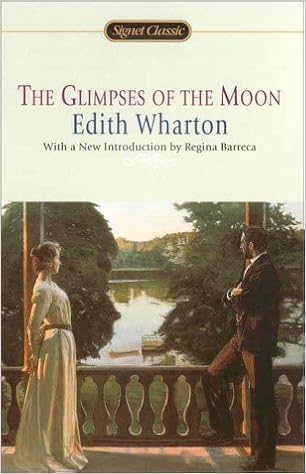
Glimpses of the Moon

Edith Wharton's Glimpses of the Moon is simple, easygoing, and very likable. Susy and Nick are intelligent characters with agreeable qualities, and following them through the pages on their months of joyriding is as pleasant as if you were there along with him. The only problem in the entire story is the irrationality of indecision that one experiences when in love, which pretty much illustrates the vanilla quality of this book.

What is it like, to live in a world where you can just completely live off of the wealth of your friends, I wonder. And even the rich, who seem to enjoy their days spending extravagantly without lifting a hand to work. I see it so often in books based in the past, and have a hard time wrapping my mind around it. Is this real? Do people like this still somehow exist in this world? How!?

I suppose it's supposed to be valiant that the couple chooses real love over material wealth, and that Susy at least seems to understand what it takes to survive in the world through her own efforts...but I'm not sure Nick does, or even appreciates what Susy has done. I hope he learns to pull his weight too, rather than spending his days dreaming and criticizing others'. I mean, really. How like a man.

Friday, May 24, 2019

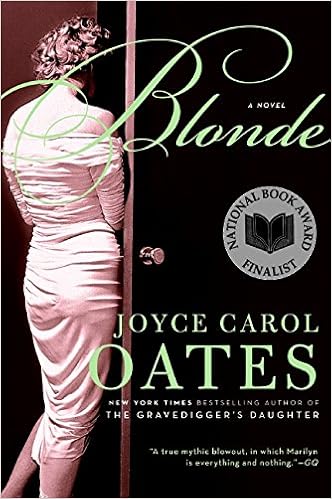
Blonde

It's curious to me why someone would write a book like Blonde by Joyce Carol Oates—fiction, altering the facts of history on a real person who already led such a storied life.  While reading this book, I often thought that I would prefer to read the real facts rather than getting led astray by Oates. I love the author's Marilyn and I'd like the real woman to have been as she is described, but I can't be sure due to the nature of this work and that bothers me, a bit. Still, remembering the surprise I felt  when I first experienced her films (she's not a sexpot bimbo, she plays a woman, believably, and sparkling with life), I can believe that she was something along the lines of the intelligent, sweet, genuine person that's characterized here.

This excerpt, which I love, sort of reflects real life vs the facade of entertainment, which I find relevant—though not exactly matching my point. Mainly, I just wanted to share it/write it down and was trying to figure out a way to work that in:

"The playwright would think how, in a play, such an accusation would have a ring of truth to it. Even as the accusation was strenuously denied, the audience would understand. Yes, it's so.
Yet in actual life the strategies of drama were not applicable. In the extremities of emotion, terrible things were said that were not true and were not meant to be true, only just the expression of hurt, anger, confusion, fear; fleeting emotions, not obdurate truths. (p 578)"

Google taught me that Marilyn did in fact write poetry, but it's not clear to me whether it was actually her words incorporated into the pages or whether those were Oates' interpretations. They were sensitive, well-written pieces, which leads me to believe they are fictionalized, but I wish that weren't so.

Anyway, the final page was beautiful and I'm getting a kick out of being introduced to female writers I've never read before. I think I'll keep up with that trend for now.

Saturday, April 6, 2019

Sabbath's Theater

Sabbath's Theater is definitely not my favorite Roth.  It's dark, dirty, tragic and sometimes hard to read through the gritty sex-driven plot which lacks the elegance I've enjoyed in his other novels.  Yet it's still smart, human, and the writing is engaging, a far more enjoyable experience than I've had with other books that have had just as distasteful topics.

To a point, you hope that Sabbath will pull through and become a better person, but over and over again he slips until his failures become irredeemable and impossible to forgive.  After so many pages piling on account after account of his predatory nature, I started to feel creeped out and uncomfortable.  Basically, only in his moments with Drenka is he ever really likable.  He's capable of being kind, charming, and even loving, and I guess that's what makes him even more disgusting when he acquieces to his vile urges.

Speaking of Drenka, the people around him are always so good in contrast.  Not just her, but Norman, Fish, Morty, Matthew and even Katie.  Despite being surrounded by their support and love, Sabbath still cannot become a model citizen.  I suppose it's a comment on human nature and the expectations of society.

I wouldn't read this again, but I don't regret it, either.  On to the next.

Saturday, March 2, 2019

Naked Lunch

You guys, I just can't do this one. I got to page 12 and called it quits. The moment I saw Kerouac's name mentioned in the prologue, I knew it was going to be tough, but even The Road I was able to suffer through to the last page. But this one—William Burroughs' Naked Lunch—is gonna be a solid no from me.

Which brings me to my first breakthrough decision about this 1001 list. There are just going to be some books that I can't stand to bear and will henceforth feel okay giving up on trying to finish. Lunch is the first work that I have officially marked as "abandoned".  I already know that Finnegan's Wake will probably also follow in Lunch's footsteps from what I have read/heard from it so far, but up until this point I had every intention of trying again someday.

Anyway, here's what I gathered from 12 pages + prologue:

It's a work based entirely on drug addiction, and was written by the author while he was suffering from this "disease".  Naturally, this subject matter makes the tone gritty, but the additional nonsensical beatnik quality is exactly the type of prose that I absolutely cannot enjoy.  There is no storyline and I swear to god I did not get any meaning out of any of the words that were being put into my brain within any of the pages I read after the prologue.  Clearly, this was a complete waste of time for me, which is why I have chosen to stop.

So back to Half Price Books this book goes...but, I'm feeling good about this new development in identifying things that I dislike enough to give up on.

Current stats on my progress:

Finished/read: 162/1001
Abandoned: 1

Wednesday, February 27, 2019

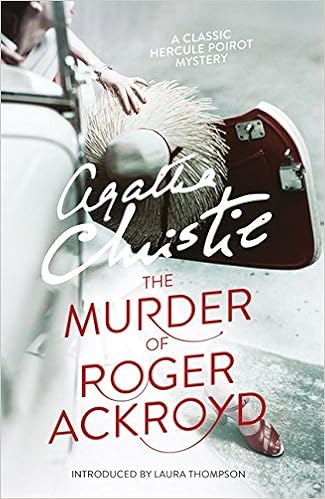
The Murder of Roger Ackroyd

The Murder of Roger Ackroyd was my first Agatha Christie novel. True to her reputation, it's a classic whodunit mystery with little for me to speak to. This one specifically had an interesting twist (thankfully) at the end, which is why I assume it was included in this list. In today's world filled with stories riffing off others from the past, the ending didn't come as quite a shock to me, but I can see it being quite an inventive storyline in the 20's when this one first came out.

Overall, it was a quick, fun read but I'm not sure I am interested enough to pick up any more of Christie's works.  There's only so much you can do with this kind of genre...(but that's me deciding that without much context so I'm willing to be proved wrong)

Sidenote, did "clue" used to be spelled "clew"?? So weird.

Monday, January 21, 2019

The Castle of Otranto

The internet tells me that The Castle of Otranto by Horace Walpole is the first gothic novel, and in true gothic form it's an extremely theatrical read. From the very first page, Walpole wastes no time—he has us running at full speed into the middle of the action (a wedding day, no less) without any formal introductions.

There's playfulness veiled in the dark and frightening events that the characters are experiencing which pushes the absurd even further: the prince dies from a giant helmet falling on him from the sky, there's giant armored limbs all over the castle, etc etc.

Also, men are just gross in this old-timey world.  Manfred is pretty rapey in his pursuit of Isabella, not to mention his easy dismissal of Hippolita in order get his mitts on the newer, younger girl.  But he's not the only gross one. Frederic, nice as he is, also fell in love with Matilda who is his own damn daughter's age. Ugh why are old men so creepy.  On the other hand, the women are on the total other side of the spectrum, acquiescing to everyone else's needs and putting their feelings first (in Matilda's case, all the way to her dying breath).  #TimesUp, ladies.

It seems unfair that Isabella should be saved and Matilda sacrificed, but I guess it shakes out that the main point of all of the bad things that happened was for Manfred to suffer.  I was quite surprised that he cared at all that Matilda died though, to be honest.  I guess he was human after all.