Friday, May 28, 2021

I Know Why the Caged Bird Sings

 I bought I Know Why the Caged Bird Sings in anticipation of Black History Month, but was working through Murakami's 1Q84 at the time and became delayed by a month. It's Asian American & Pacific Islander Month now, but hey, I'm asian anyway, so let me pass this moment on to another minority. Seems fair.

Based on the title, I had always ignorantly pictured the content of this book to be painful and dark, and for the writing to be sing-songy like a plantation song. It didn't appeal to me before because of these baseless assumptions, but of course as soon as I started reading, I realized it's not.

The tone is easy and approachable, upbeat and inviting. It's written in the cool voice of an adolescent without hefty cares, and even the most devastating section in which Angelou recounts child rape soon passes like a distant memory and is again replaced with the daily joys and confusions of a young girl just growing up in an adult world. 

The jarringly abrupt ending felt strange to me, but hopeful. I wanted more, but I suppose that's what the end of childhood is.

In the end, one excerpt really stood out to me, and felt poignantly relevant to the conversations happening recently:
    "The Black female is assaulted in her tender years by all those common forces of nature at the same time that she is caught in the tripartite crossfire of masculine prejudice, white illogical hate and Black lack of power.
    The fact that the adult American Negro female emerges a formidable character is often met with amazement, distaste and even belligerence. It is seldom accepted as an inevitable outcome of the struggle won by survivors and deserves respect if not enthusiastic acceptance."

Monday, June 1, 2020

Rabbit Angstrom

3 out of 4 of John Updike's Rabbit novels are on the list, which is strange—why not all? I bought the full tetralogy in order to knock them all out together. Updike's writing style is painterly and breathes so much beauty and emotion into the most mundane scene. Harry "Rabbit" Angstrom's story is the epitome of the everyman with nothing extraordinary left to him but the glory of his youth.  I imagine this is the life that most of the "popular" kids in my high school are living now and this collection of writings is an homage to the of the average American in a gorgeous way.

#457. Rabbit, Run (4/1/20): 258 pages about a man on the run, literally.  Full of regret, unable to commit to anything, and clinging to his past, Harry is a pathetic adult who throws away every positive opportunity and morsel of forgiveness that is thrown his way.  If you met him in real life, he would be an unremarkable person you would either forget immediately, or pity in a contemptuous way. Yet under Updike's artful mastery of prose, it's all beautiful to read and you don't mind following him around for a while.
The end changes dramatically based on the idea of Rabbit, Run as a one-off book on its own vs one that's part of a continued story. The open end of his potential "choice" between two women/two futures (which ultimately, essentially, are the same thing) has an ominous yet freeing feeling to it, which quickly gets stifled in knowing that there's more to come. Knowing that Updike wrote the books with years in between, I imagine he didn't know for sure that there would be more to each story—and thus the reader at the time would have only felt the former—but I honestly don't know. '

----

#361. (6/1/20) Rabbit Redux is, simply put, devastating. Compared to Run, there is a violent level of tragedy and heartbreak in comparison to the sudden, jarring event in the first book.  Harry (and maybe Janice, too) is growing as a person, yet he and Janice stay ever the same, stuck where they are in perpetuity despite whatever chances they get.  It's the American ethos that's everywhere and anywhere, though far from the American dream.  It's what people really live (ok, maybe a tad more dramatic for the sake effect, but you see what I mean) and it comes down to one's motivations and choices and beliefs.

When I first started reading Redux, the characters seemed out of date in this day and age and at times, so hard to deal with due to Rabbit's initial southern/confederate racism and Janice's frequent misogynistic remarks about women.  Laughably out of touch from what I perceived the world to be now—kind of like in that one episode of Mad Men where Betty throws all her garbage from her picnic blanket onto the grass in the park and walks away leaving a heap of trash in the middle of pretty nature. So absurd, like a joke, but also just so cringey and rage-inducing that you can't laugh.

But then, I realized that Rabbit actually isn't as "republican" as he seemed. He's open to experiences, and people of every race, and is simply looking for sincere relationships.  Yes, he often speaks using incredibly offensive words and ideology, but you see that that's not him, deep down at the core of it...and maybe it's just a reflection of the times.  He just needs his mind changed; he's open to it,  if you have the patience to teach him.   It's incredibly relevant now, amid Black Lives Matter and George Floyd. It's coming to light that things haven't changed all that much since the '60s, after all (heck, we just launched men into space again this week so I guess we truly are in the same place).

In the final pages, Harry remarks on a black bachelorette on The Dating Game choosing between a white, black, and asian man hidden behind a screen, pointing out that she can't see their skin colors and would have to distinguish them by voice, if she wanted. He seems curious, and open, and as if he's just discovered something. The moment passes quickly with Janice's dismissal, but it's powerful and beautiful, and really made me pause.

----

#281. (8/29/20) Rabbit is Rich has so. much. sex. It's practically impossible to get through 8 pages without hitting some softcore sex scene, whether it be actual or imagined.  Still, it maintains the quiet elegance of un-elegant people, just as the past 2 books did. 

Rabbit is now older, and in a settled comfortable life. He has money, friends, and time to spare, and the social standing to pass judgment on others.  He's settled into an easy, successful life that contrasts so starkly from the chaotic tragedies of the past books that the memory of all those incidents feel like they belong to someone else.  Even when there is a jarring incident that affects a pregnant Pru in Rich, it ends in no harm done and one can go along with a sigh of confused relief, having expected the worst after the last two books.

What struck me the most in this round—especially echoing the current climate of America around me as I read it—was the idea that society don't change, no matter how many years pass. There's a conversation between Rabbit and Charlie that's absolutely true, yet still could be spoken today in the same exact way:

"The oil companies made us do it," Charlie says. "They said, Go ahead, burn it up like madmen, all these highways, the shopping malls, everything. People won't believe it in a hundred years, the sloppy way we lived."

We know our vices, but it's so difficult to change them. Why does it take so long to bring change? Why are people always making excuses for roadblocks, instead of moving toward the positive futures we know to be the right path? It's so American. Or maybe, it's just human nature in general.

Sunday, December 29, 2019

The End of the Affair

Graham Greene's The End of the Affair is only 160 pages, yet manages to pack in such complexity and believable emotion that it makes me wonder if the author actually lived through some failed affair himself.

Though the main character, Bendrix, describes his story as one of hate, every action is so steeped in love that it's incredibly easy to relate. He and his situation become so real that it's like reading someone close's diary while he in turn is reading someone else's (at times. See, it's like intricate weaving). His relationship to God too, is something I can relate to.  And it's not only him but to every character presented that you get attached to. Everyone is so tragic and real and likable, which I honestly wasn't expecting. It's a timeless yet modern work that's definitely worth a try.

From a more current reading list, I've also recently finished reading The Starless Sea by Erin Morgenstern. I'd never read her previous book, but after seeing a random review of this new one, I was interested and bought it immediately. It's a fairy tale for adults, and Morgenstern creates gorgeous imagery with skill, without losing control of the plot. Her style reminded me of my writing in college, so it was definitely up my alley. It was a change of pace to read something that leant more on the entertaining side without having to stretch my brain—the pages flew by and I enjoyed it all the way.

Saturday, November 2, 2019

Stranger in a Strange Land

#444, Stranger in a Strange Land by Robert A. Heinlein is a mixed bag. I enjoyed it, though the cult aspect of it toward the end got a bit creepy, which I guess it was meant to be. I'm trapped in a loop of mental conflict when it comes to deciphering Heinlein's message, though. Is the narrative telling me that society requires something/someone to follow and believe in, or that rather people are easily brainwashed by those that seem to perform miracles? Or, is it that there is no true right or wrong and that society's morals are fallacies....or further yet is it that people can be so easily manipulated to do wrong as long as there is a convincing figurehead telling them to do so? Maybe it's all these things. Maybe it's just about the shortcomings of humanity as a whole.

My biggest gripe is with Jill, who started off as such a strong, smart persona but just ended up turning into an opinion-less sex object after she basically gets bewitched by Mike.  The same goes for the rest of Jubal's lady friends.  Is that Heinlein's idea of women faced with men of power?  Maybe it's just a result of the difference between the times, but it's still disappointing.

Not being a fan of religion myself, however, I kind of liked it that the crazy Fosterites ended up being legit.  A light touch of comedy there in the end.

Also can someone tell me what the big thing about whoever Dorcas' kid's father is? Is it not Mike??? WHO IS IT AND WHY IS IT SUCH A BIG DEAL?

Thursday, September 12, 2019

The Years


There's a lot of things that made me stop and think (or maybe, more accurately, pause on the realization that I had such a thought while I was still reading) about Virginia Woolf's The Years that didn't have much to do with an overarching plot line.  In truth, there were so many characters presented in this book that it was hard for me to keep track of them all, and because only a few of them stood out for me enough to be remembered, I simply just allowed myself to drift along without a clear idea of who anyone was at any given time but rather just delve on the individual moment presented and the feelings that were felt.

This is my second experience with the late Mrs. Woolf's works, and what I'm discovering is that she is showing the world that the aging female character is a person, and that's she's just as capable—if not more so—of being an interesting and textured lead character than any of her younger counterparts (though I guess no one was really a lead in this book).  She doesn't always need to be restricted to a passing name or supporting role, and it's a strange thing to think about how even in 2019, it's not something you come across much.

The other thing, is that the writing in this book is so theatrical. In the final section, someone opens a book, and Woolf writes "Always before reading he had to arrange the scene; to let this sink; that come forward." and that's exactly what she does — Chapters (years) are religiously set up with a scene and the weather to set the tone. As characters come in contact with one another, their stories pass from one to the other like a camera seamlessly swinging from one point of focus to another in a single second. It's all very fluid and thoughtful.

There was a lot of repetition in this book that I couldn't quite crack the meaning of. Almost every character at some point repeats a line that they've spoken several times, often back to back. It's unsettling and strange but there must be a reason for it.  Maybe it ties in to the idea that life is just a series of repetitions, as one of the characters notices at some point.  The ending certainly supports that feeling—it's a pretty and hopeful one, encapsulating life lived as a memory and the eternity of youth within one's mindset.


Thursday, July 4, 2019

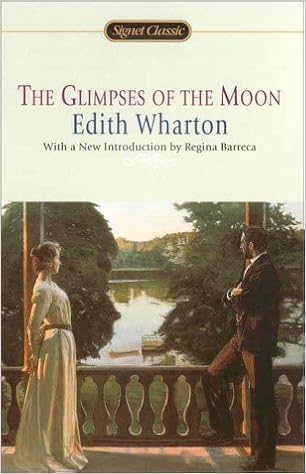
Glimpses of the Moon

Edith Wharton's Glimpses of the Moon is simple, easygoing, and very likable. Susy and Nick are intelligent characters with agreeable qualities, and following them through the pages on their months of joyriding is as pleasant as if you were there along with him. The only problem in the entire story is the irrationality of indecision that one experiences when in love, which pretty much illustrates the vanilla quality of this book.

What is it like, to live in a world where you can just completely live off of the wealth of your friends, I wonder. And even the rich, who seem to enjoy their days spending extravagantly without lifting a hand to work. I see it so often in books based in the past, and have a hard time wrapping my mind around it. Is this real? Do people like this still somehow exist in this world? How!?

I suppose it's supposed to be valiant that the couple chooses real love over material wealth, and that Susy at least seems to understand what it takes to survive in the world through her own efforts...but I'm not sure Nick does, or even appreciates what Susy has done. I hope he learns to pull his weight too, rather than spending his days dreaming and criticizing others'. I mean, really. How like a man.

Friday, May 24, 2019

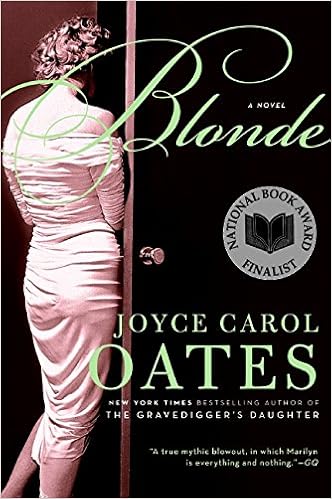
Blonde

It's curious to me why someone would write a book like Blonde by Joyce Carol Oates—fiction, altering the facts of history on a real person who already led such a storied life.  While reading this book, I often thought that I would prefer to read the real facts rather than getting led astray by Oates. I love the author's Marilyn and I'd like the real woman to have been as she is described, but I can't be sure due to the nature of this work and that bothers me, a bit. Still, remembering the surprise I felt  when I first experienced her films (she's not a sexpot bimbo, she plays a woman, believably, and sparkling with life), I can believe that she was something along the lines of the intelligent, sweet, genuine person that's characterized here.

This excerpt, which I love, sort of reflects real life vs the facade of entertainment, which I find relevant—though not exactly matching my point. Mainly, I just wanted to share it/write it down and was trying to figure out a way to work that in:

"The playwright would think how, in a play, such an accusation would have a ring of truth to it. Even as the accusation was strenuously denied, the audience would understand. Yes, it's so.
Yet in actual life the strategies of drama were not applicable. In the extremities of emotion, terrible things were said that were not true and were not meant to be true, only just the expression of hurt, anger, confusion, fear; fleeting emotions, not obdurate truths. (p 578)"

Google taught me that Marilyn did in fact write poetry, but it's not clear to me whether it was actually her words incorporated into the pages or whether those were Oates' interpretations. They were sensitive, well-written pieces, which leads me to believe they are fictionalized, but I wish that weren't so.

Anyway, the final page was beautiful and I'm getting a kick out of being introduced to female writers I've never read before. I think I'll keep up with that trend for now.