Friday, January 6, 2023

Memento Mori

Muriel Spark's Memento Mori started very differently from how it ended up. It seemed, in the first few pages, that it was going to be a quirky mystery about a happy group of senior citizens but became more of a nebulous network of...I don't even know what, centering around too many old folks that it was nearly impossible for me to keep track of who was who at any point. Maybe that's a remark on how easily young people forget the old and think them all the same without any remarkable features. I wish it had been what I initially thought, though, because I personally didn't get much entertainment or inspiration from this slog. Goodreads is full of 5 star reviews for this book and I really can't relate to that at all. I guess it was fine? But it wasn't enjoyable and after finishing it, I feel I've come away with nothing to hold on to.

The fact that the "villain" was named Mrs. Pettigrew threw me off as well since it's so strongly attached to what I only loosely know as a happy woman finding herself in a different Winifred Watson work.

I guess that's all I have to say to that. This recap pretty much sums up my experience. A big ole "shrug" emoji.


Wednesday, October 26, 2022

Nadja

Nadja by AndrĂ© Breton proved an extremely quick—though not especially easy—read. It's quite simply a thin volume of artwork, composed of short musings interspersed with photographs referred to in the passages. Queer things happen without consequence and are immediately forgotten, but a mystical kind of feeling hangs over every page and there's a weight in every curious photograph that's hard to describe. It's actually one of the most successful pairings of prose and visual arts that I've seen, as I think this type of thing often bears disappointment or confusion. 

I recently watched the recent HBO series "Irma Vep", and I get the same curiously playful mood from Breton's work. Perhaps it's some sort of Frenchness that they share—light with a bit of darkness, complex but never unpleasant. 

Thursday, October 20, 2022

A Farewell to Arms


Ok what the fuck?

I spent the entire time reading A Farewell to Arms wondering how Hemingway even had multiple drafts (my edition has photos of the author's handwritten notes and an appendix full of "Early Drafts") for such a simple and seemingly plotless narrative...but then the last 2 pages came and blew the drama out of the water. AND THEN IT JUST ENDS? WHAT HAVE WE LITERALLY BEEN DOING FOR ALMOST 300 PAGES?

Seriously, 282 pages of what read like a rando's personal diary for whom you don't feel any affection for, with terrible dialogue and a personality-less love interest, and then suddenly—and this is a spoiler now—she's dead and so is the baby (but also we don't care about the baby anyway?). I"m so confused about how this is even a book.

I chose this novel off the list because I had such a good experience with The Old Man and the Sea, but this was truly night and day. The heart-pumping action nor the passion of the former was non-existent (the main character in this book just nonchalantly slides out of danger like he's in a dream...or at least it's described that way) and sometimes the back-and-forth dialogue between the hero and his one-note old timey movie starlett love interest became so embarrassingly repetitive that it was downright cringe. "You won't with other girls will you now? Oh but I do want you to have other girls. I'm just a silly girl, don't you worry about me. I just love you so, don't you worry I'm a good girl now." Good god.

Hemingway MUST have learned how to write in some kind of dramatic change in the 23 years between Farewell and Old Man because they don't even read like they're coming from the same author. Is it the difference of pretentious youth and learned age? The difference is mind-bogglingly vast.

Friday, September 2, 2022

A Tale of a Tub

I must confess I've come across another work I've had to *partly* give up on.

I've attempted to get into Jonathan Swift's A Tale of a Tub twice now, and I just can't do it. The verbiage is too difficult and because the allusions he's making are so far in the past and unknown to me, it's pretty damn impossible for me to grasp what he's talking about at any given time...save the general story of the three brothers. 

I fell back on reading the cliff notes first to identify which chapters seemed approachable, and then used that to inform what I read as I went.  When clearly explained, I see that Swift is making clever critiques on social and political issues of the day but just from strictly reading on my own, it was neither enjoyable or comprehensible. I wonder if in its time it was considered accessible or "intelligent". If it was the former, it's interesting to see how vast the differences in writing and parody have come.

Wednesday, August 3, 2022

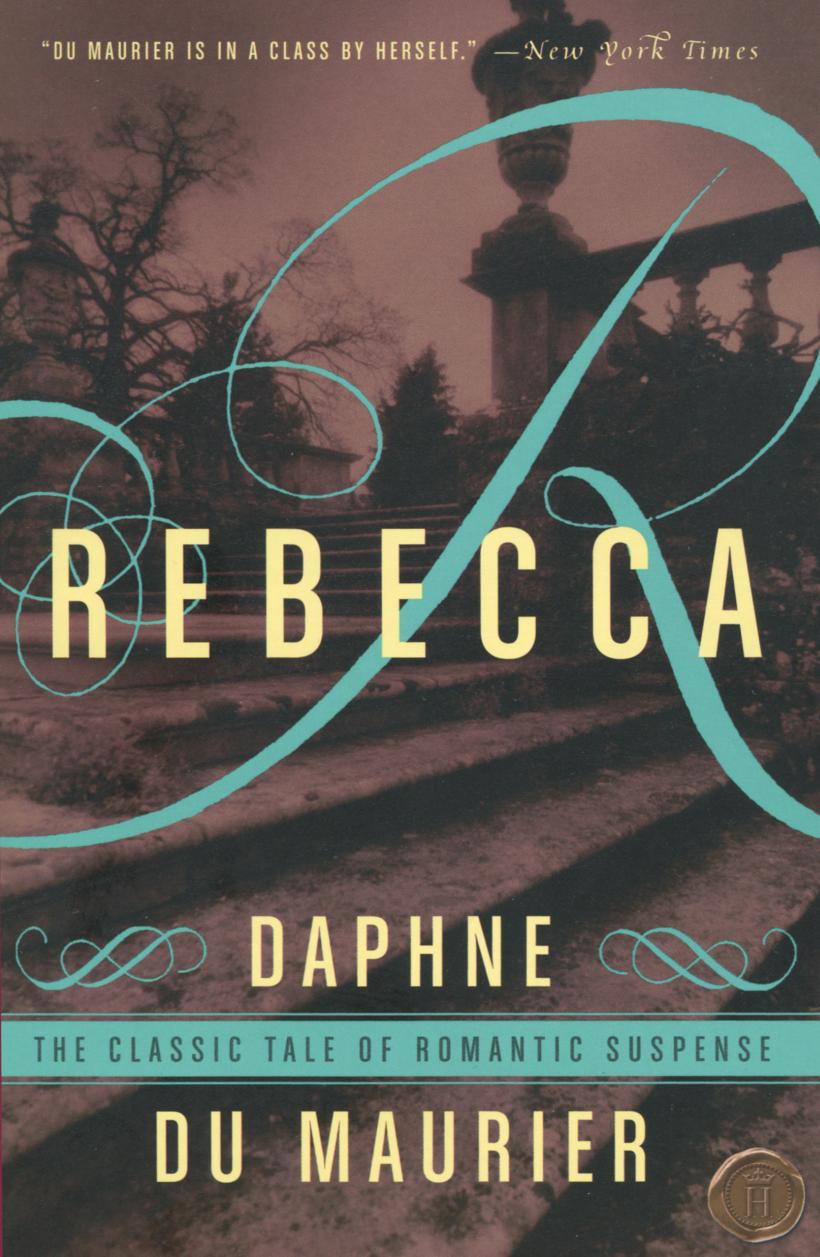
Rebecca

I remember "watching" Hitchcock's Rebecca sometime after college, eventually falling asleep puzzled that it wasn't the ghost story that I had thought it was supposed to be. The source material—Daphne Du Maurier's novel—is much better than I recall the film to be. At least, that's the way I feel now. Maybe I've just grown up a bit.

The first bit is a haunting mystery that's as consuming to the reader as the idea of de Winter's former wife is to the heroine. Every chapter psychologically affected me with a pull that made it hard to put down—and when I did, it took awhile for the spell of the story's dark mood to fall away and for me to come back to real life. 

The climax changes pace, but the feeling of foreboding mystery remains. It no longer has the creeping heaviness from the previous chapters, but more of a frantic modern one which is quite an interesting artistic turn. In fact, the author shows a lot of talent in what she does, for this being a somewhat older work. She doesn't play into cliche traps (at least, not toward the end; the fact that Ben keeps his secret through the end, for example) but rather takes surprising twists, knocking you off your path as you start to feel you've guessed the way ahead. The original epilogue included in my edition, as well, shows just how many smart decisions she made to create the final masterpiece.

I would love to see a depiction of how Du Maurier imagined Rebecca to look. In my mind, she was the subject of a Klimt portrait I saw at the Belvedere in Vienna. When I saw it, I remember thinking I had never seen anyone so beautiful. A woman from another era, out of reach and gone forever.

Monday, May 16, 2022

The Lord of the Rings

I read The Hobbit back in middle school, and though I very much enjoyed it, I never went on to read The Lord of the Rings trilogy and I'm not sure why—I was obsessed with the fantasy genre as a kid. Maybe The Hobbit came at the tail end of that phase in my life, but I remember thinking that it was "for boys" and that I didn't want to try it. When the movies became explosively popular, I still didn't partake and to this day I've never seen any of them. I'll have to change that once I'm done with these books.


The Fellowship of the Ring

My main takeaway is that it's cute. The friendships, the scenery (absolutely beautiful depictions by Tolkien), and generally, the happiness exuding from the whole thing. Even as there's constant danger and imminent death tailing Frodo and his pals, they sing upbeat tunes to pass the time and somehow constantly make it to safe havens where they are altogether protected. Unlike the real world, friends can be trusted to be good and there is a clear understanding of who the opposition (or enemy) is. There's comfort in the childlike innocence that seems to surround Frodo, and the trust that can be unequivocally given to the "grownups" like Gandolf and Aragorn.

Quick, exciting, and a pleasure to read—on these adventures, I'm brought back to my childhood self who loved the fantastic. I look forward to continuing the story.


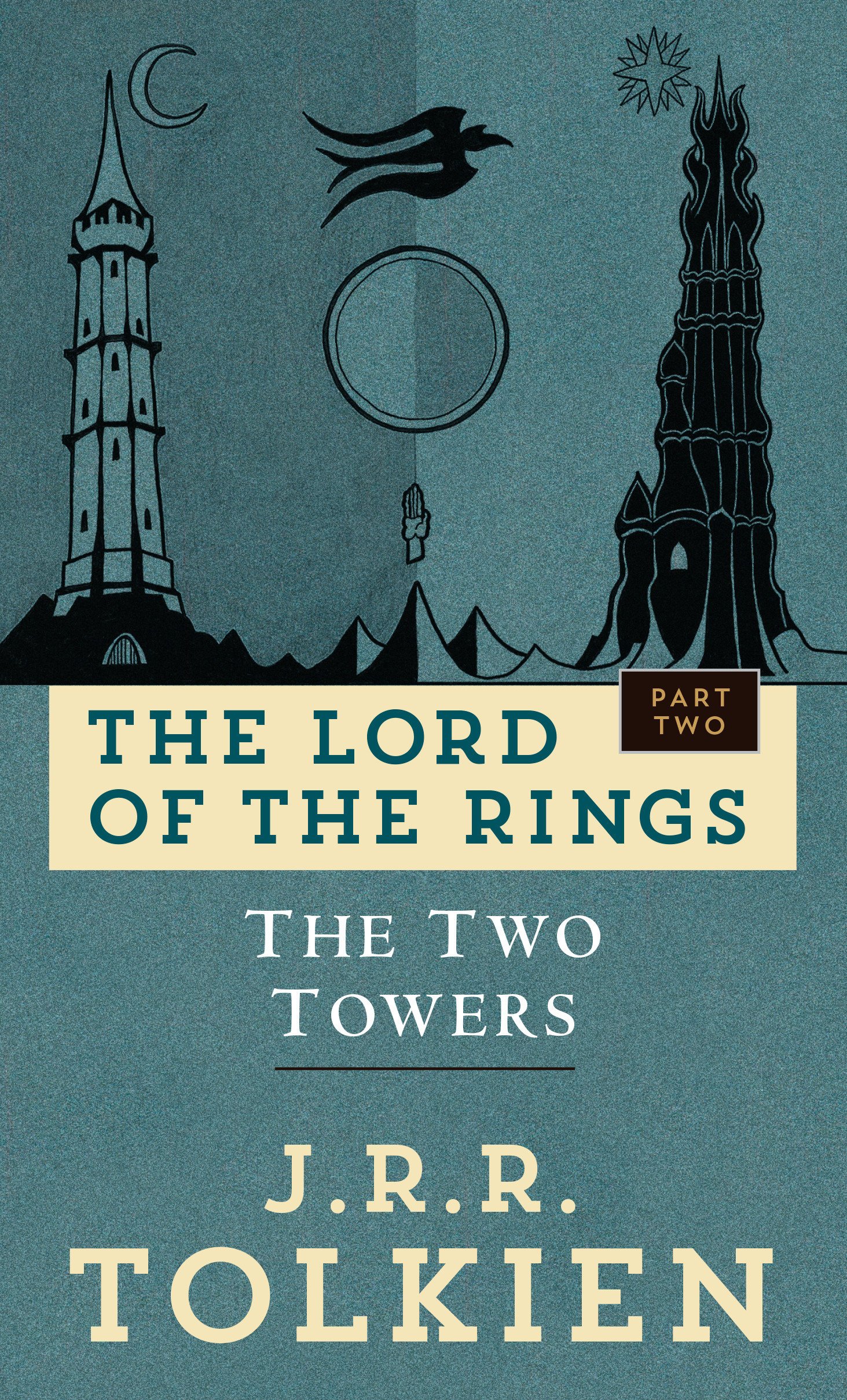
The Two Towers

There's a definite shift in tone for this part of the journey, straying from leisurely merriment to a darker foreboding one. What remains, though, is the safety of friendship (and the giving of gifts when one is met, which is a lovely trademark fantasy move—I wish strangers would give me things to aid in my journey every time I came across them). 

The splitting of parts for different POVs between the divided Fellowship members is interesting. Personally, I preferred following Frodo, Sam and Smeagol...who turned out to be quite charming, in his way. He caught 2 rabbits for the hobbits to eat? Adorable. The somewhat sudden (?) bromance between Legolas and Gimli is a close second for cuteness factor, though.

Backing up, the forward in the second book of my "only complete and authorized US paperbound edition of the trilogy" is by Peter S. Beagle from 1973, and he opens with the fact (similar to the forward in the first book) that when he first read the trilogy, it was hard to find and practically a secret. It's hard to imagine what that would be like, in today's world of readily available media.

Anyway, his note about the relevancy of the work to the Fifties and Sixties is lovely and seemingly as fitting to today's world than it was back then. The world is cruel and backwards, and Middle-earth is an escape.  At least there, right and wrong are clear.  I wonder when progress will finally become a reality instead of just an idea:

"We are raised to honor all the wrong explorers and discoverers—thieves planting flags, murderers carrying crosses. Let us at last praise the colonizers of dreams."


The Return of the King

I've never much liked battle scenes, so with this third book being made up mostly of that, I have to say it was my least favorite. Whenever the story strayed from Frodo's quest, I found myself disengaged and bored—I don't care to read the details of men at war. Tolkien also really started going gangbusters throwing out different names and locations in this one and it was SO hard to keep track of what was what. Honestly, I kind of gave up and just glossed over really understanding those parts.

In the end, though, it was an epic tale of adventure and friendship. The hobbits come out as boys changed into men who earn almost equal standing with the protectors who seemed so very grown up in comparison in the beginning. Like many other stories, the "hero" (Frodo) couldn't have done anything on his own and it's thanks to the friends around him that he accomplished anything at all; Sam, being the real MVP, or course, with the most heart, bravery, and conviction of all. I'm glad to see, too, that Bilbo did not perish—his nodding off to sleep in old age near the end really frightened me into thinking it was the end for him.

There is now almost a third of the remaining book's worth of appendix, which looks to have additional backstory on various characters, including Aragorn and Arwen. I watched the first LOTR movie after having read the first book, and at the time, thought the random romance between the two to be a cheesy Hollywood addition. Perhaps it wasn't, and it was here all along. My next task will be to find out.

Saturday, April 2, 2022

Patterns of Childhood


I've never read a "Holocaust book" from the perspective of anyone but the Jews, so Christa Wolf's Patterns of Childhood certainly a broadened my literary education. It also feels quite relevant now in the wake of Russia's invasion on Ukraine—the idea of "normal" life on the other side during wartime, and what it means to come to terms with a past in which you didn't understand your actions as you lived them.

Relative the world as it is today, two excerpts stood out:

1. "The Allied Forces did not publish the first news they received of the extermination camps. The reason: they couldn't believe it. They didn't want to become guilty of spreading horror propaganda. We, the people of today don't put anything past anybody We think that anything is possible. This may be the most important difference between our era and the preceding ones."

2. "The ability to adapt is one of the reasons for the survival of the human species, you tell her. 
    That's clear, says Lenka. But what if humanity adapts to those very things which will destroy the species? Huh? Then what? Say something."

In today's world of fake news and amplified voices, those blurbs feel both radically true and not at the same time and I can't clearly explain what those thoughts stir in me. It's something profound, though.

Anyway, the writing, too, is very interesting. Wolf differentiates the main character (herself?) between childhood and the present, literally, distinguishing them by treating them as 2 separate names; "Nelly" and "you". It's an effective way to think of one's self between then and now and it's also something I don't think I've ever seen done before. 
She also writes like you're reading someone's thoughts in real time and it's got to be some sort of insane talent because I still can't comprehend how she does it. Topics and subjects hop from one to the next with such fluidity that it's impossible to even notice when it happens, or to pinpoint at what point it even happened. 

Having based my college thesis on the idea of memory, this novel was right up the alley of the type of artful writing that interests me. Wolf tackles so many heavy topics like the tragic mundanity of being blind to what is going on around you, the fallacy of memory, and the gaps in understanding between generations all in a way in which you really live them, as opposed to read about in history books or documentation. I'm sure it would have influenced my work as an art student had I read it back then, but reading it now felt like connecting with a teacher who thinks of things in a similar way as myself.