Sunday, December 22, 2024

Lost Illusions

As a one-off read (especially in the year 2024), Honore de Balzac's Lost Illusions feels a bit long-winded for what it is. It certainly offers a detailed look into French life in the 1800s, showcasing a variety of classes and exploring the spectrum within virtues, naivety, and greed of humanity. But did it really need to take 630 pages to do so? 

I did find myself engaged in Lucien's debut and struggles in Paris, but lost interest after a while of so many repeated acts of selfishness. The pages after pages detailing the inner workings of the publishing industry, too, were maybe groundbreaking at the time (?), but I could have done with a briefer summation. I got the sense that it was a personal topic for the author, which sort of made me excited at times, but it ended at that.

I found it odd, too, that the story completely switches focus during the end and zeroes in only on Eve and David. I did care for them as characters, but feel that it would have been more balanced to read of their goings-on at the same time as during Lucien's dandy rampage. The ending certainly felt flat, with the two ending up just fine after all the focus that was put on the struggles that befell them. Is it just to point out that Lucien is a POS leech of a human? But then again Lucien isn't even mentioned at all in the final epilogue-ish roundup at the end???? He's just...gone now, taken by a Spanish priest? Weird.

All that said, my copy of the novel worked very hard to detail the impact that Balzac had on literature as a whole. The fact that he developed the same set of characters throughout many works written during his career, and writing stories that revealed true depictions of societal issues and human nature is certainly interesting and something to applaud. I'm sure it shaped a lot of the novels I love today, and also gives people in the future (me) an honest look into "regular" life 200~ years ago. 


Friday, March 8, 2024

The Once and Future King

 The Once and Future King by T.H. White is, simply put, a masterpiece. It's everything in one—whimsical, adventurous, humorous, adorable, playful, thoughtful, emotional, intelligent, and above all, kind. Nearly every single character that White introduces has a depth and lovability to them that's impossible to avoid becoming attached to, and the level at which he can create dimensionality and complexity to each one so that they feel like true flesh & blood is so impressive. 

Though based on the classic legend, you don't need to have any prior context about the King Arthur stories in order to enjoy this book to its fullest. At times full of jest, and at others, deeply serious, White's writing is always self-aware and accessibly engaging. Part I consists of an episode of the carefree and formative years of youth, the middle sections add introduction and context to new characters and relationships formed mid-life, with the final section ending with a wistful reflection back on all that has passed. 

At the finale, looking back at where the story started, you (or, at least I) really realize what a true saga you've a part of, and it feels like such a privilege to have been able to witness not only Arthur's whole life but the journeys of those around him. You come away hoping old Wart will be protected at all costs—not only physically, but emotionally...and you realize that the story wasn't really only one about a king and his round table, but one of humanity itself.


Saturday, July 22, 2023

The 13 Clocks

The foreword in my copy of James Thurber's The 13 Clocks was written by the venerable Neil Gaiman, and describes it as "probably the best book in the world". He goes on to say that "it doesn't need an introduction. It doesn't need me." and this loving, devoted praise written in playful, honest jest set me up to love the book before it even started.

The 13 Clocks is wonderful, dreamy, adorable, and sometimes frightening. It's the shortest adventure I've ever gone on, over in the wink of an eye, but introduces more fantastical new ideas than I could usually find in 30 volumes. There's a prince, and a princess, and witches and creatures with riddles, described in jestful language that keeps you reading more. You can tell just how much fun Thurber was having writing it, and the feeling is infectious.

Marc Simont's accompanying illustrations are equally masterful, and the perfect match to the magical world in which the story takes place. There's a cute, innocent look to the characters that balances a graceful beauty that perfectly captures the childlike fantasy of Thurber's rhymes, shadowed by the darker curiosities of an adult world. 

Playful, witty, and endlessly creative, this story is pure delight and it's one I'd happily read again and again.

Sunday, July 2, 2023

Miss Pettigrew Lives for a Day

Simply put, Winifred Watson's Miss Pettigrew Lives for a Day is a 1938 romcom. A lighthearted romp of a "modern" fairy tale, the main character storms her way through misadventures in a whirlwind way reminiscent of an Amelia Bedelia book, teetering between adolescent naivety and adult frivolity. The illustrations which intermittently appeared further pushed the feeling of it being a children's story with oddly comedic contrast to innocent line drawings with accompanying excerpts like "That's cocaine". Was this normal for the time? I've never seen it before, but if it was an intentional choice, it's hilarious and brilliant.

My copy included a preface by a woman whose mother loved the book for its ability to speak to the fantasies of a middle aged woman—and I can appreciate how that might be an exciting and appealing genre for a woman of that age and time. For me, it was a quick and enjoyable (though at times frustrating in the yelling-at-the-movie-screen kind of way) distraction that didn't require much thought. 

Though following Guinevere's adventures through a glitzy socialite's day was fun, what I appreciated most was the warmth with which female friendship was displayed. Delysia is so lovable and welcoming (while also beautiful), and that's such a rare thing to see in entertainment these days. That feeling of being accepted and appreciated as Miss Pettigrew was is what anyone wants, and that's the true Cinderella moment of this whole story. Finding a true friend can be the most rewarding thing a woman can ever experience.

Sunday, May 21, 2023

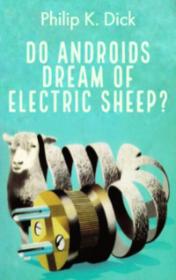
Do Androids Dream of Electric Sheep?


Philip K. Dick's Do Androids Dream of Electric Sheep? is oddly simple, dwelling on the loneliness of existence and human beings' endless pursuit of connection and deeper feeling in an ever-more isolated and artificial world. It starts strong, introducing a new world that's exciting to discover and seek to understand. Rick Deckard's motivations are engaging, and the mysteries of androids and the question of whether they're "good", "bad", or neither, is something worth investigating. 

But somewhere along the way, it feels like Dick loses steam and along with it, interest in his own story. At what should seem to be the climax of the story, Deckard shows up to battle his supposedly toughest adversaries, but finishes the job with head-scratching ease and the scene is over, just like that. Deckard's character is suddenly tired and confused, inexplicably losing the personality that originally made him so likeable. 

The ending, in a quiet moment showing Iran, Deckerd's wife, taking care of him for the first time feels incomplete and lacking warmth, but maybe that's the point. Like Deckard, the reader must ultimately settle and go on with their lives.

Friday, January 6, 2023

Memento Mori

Muriel Spark's Memento Mori started very differently from how it ended up. It seemed, in the first few pages, that it was going to be a quirky mystery about a happy group of senior citizens but became more of a nebulous network of...I don't even know what, centering around too many old folks that it was nearly impossible for me to keep track of who was who at any point. Maybe that's a remark on how easily young people forget the old and think them all the same without any remarkable features. I wish it had been what I initially thought, though, because I personally didn't get much entertainment or inspiration from this slog. Goodreads is full of 5 star reviews for this book and I really can't relate to that at all. I guess it was fine? But it wasn't enjoyable and after finishing it, I feel I've come away with nothing to hold on to.

The fact that the "villain" was named Mrs. Pettigrew threw me off as well since it's so strongly attached to what I only loosely know as a happy woman finding herself in a different Winifred Watson work.

I guess that's all I have to say to that. This recap pretty much sums up my experience. A big ole "shrug" emoji.


Wednesday, October 26, 2022

Nadja

Nadja by AndrĂ© Breton proved an extremely quick—though not especially easy—read. It's quite simply a thin volume of artwork, composed of short musings interspersed with photographs referred to in the passages. Queer things happen without consequence and are immediately forgotten, but a mystical kind of feeling hangs over every page and there's a weight in every curious photograph that's hard to describe. It's actually one of the most successful pairings of prose and visual arts that I've seen, as I think this type of thing often bears disappointment or confusion. 

I recently watched the recent HBO series "Irma Vep", and I get the same curiously playful mood from Breton's work. Perhaps it's some sort of Frenchness that they share—light with a bit of darkness, complex but never unpleasant.